
Where India’s handlooms find a second life.
A mother–daughter design studio crafting Masakali dolls from reclaimed handloom, and curating handwoven saris from India’s weaving clusters, since 2012.
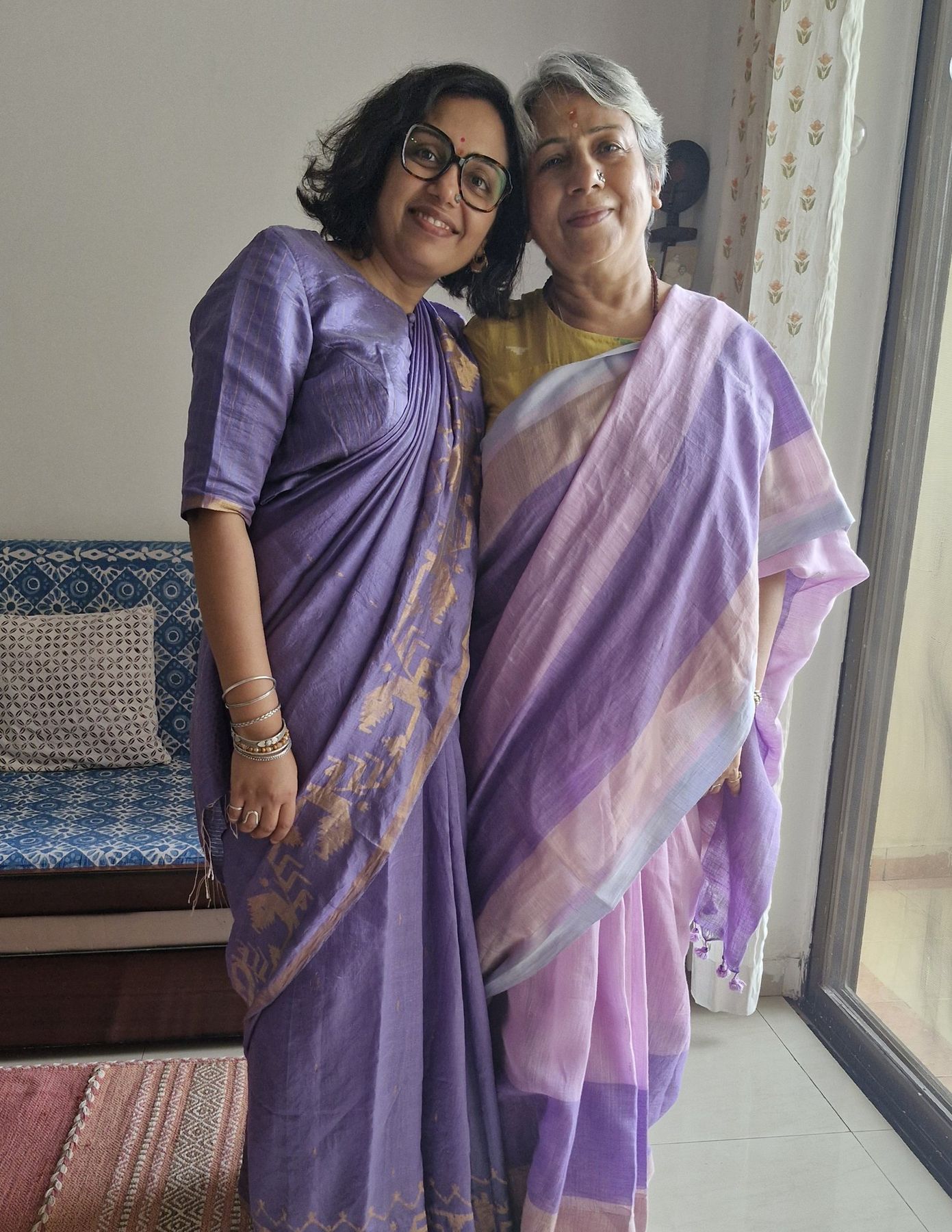
A mother’s loom, a daughter’s needle.
In 2012, Gita Jaiswal turned ₹75,000 and a borrowed shelf in her brothers’ Raipur store into Julaha Handloom, now KathaDoi Handloom. It is a handwoven-sari destination built on directationships with weavers.
Her daughter Ridhima Jaiswal, an NIFT New Delhi alumna with more than fifteen years in design research, carried those values into Project Masakali: dolls made from the handloom the loom leaves behind.
“As demand grows, we don’t speed up the clock. We simply widen the circle.”Ridhima Jaiswal

What the loom sets aside.
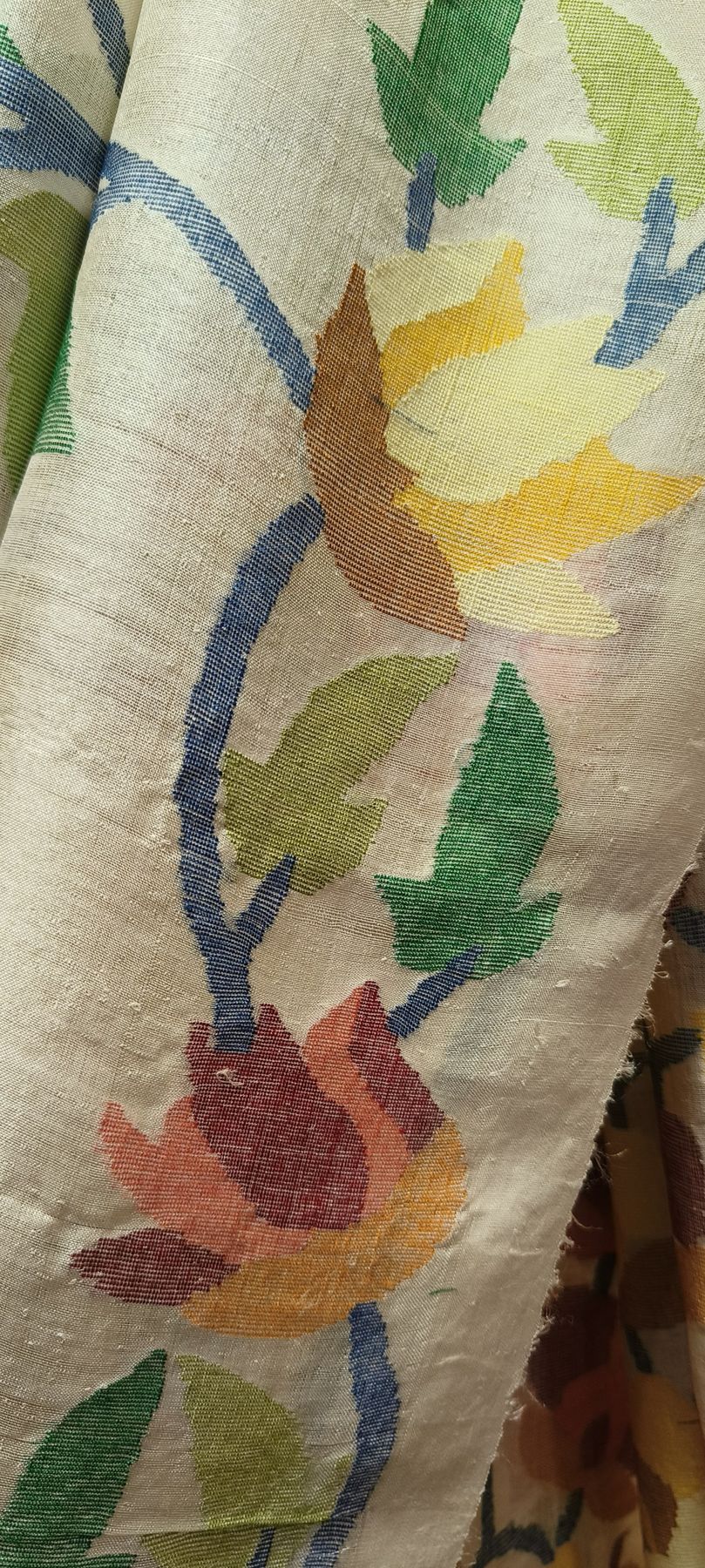
A length a weaver couldn’t sell. Off-cuts from a tailor’s floor. A sari nobody wears any more. Here, it begins again.
The women who make these dolls learn to stitch with us. They are paid from their first stitches. Even the practice pieces become something.
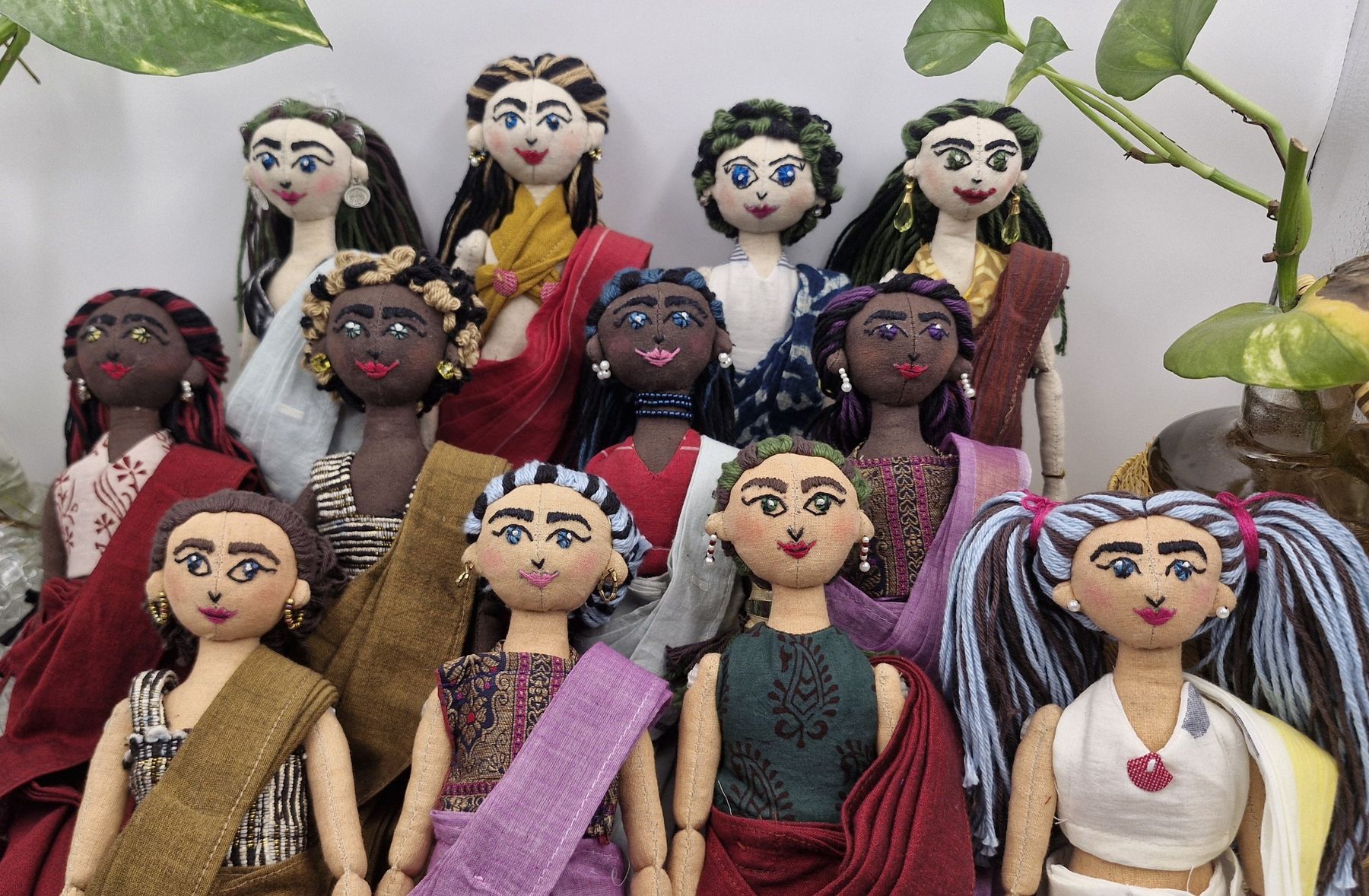
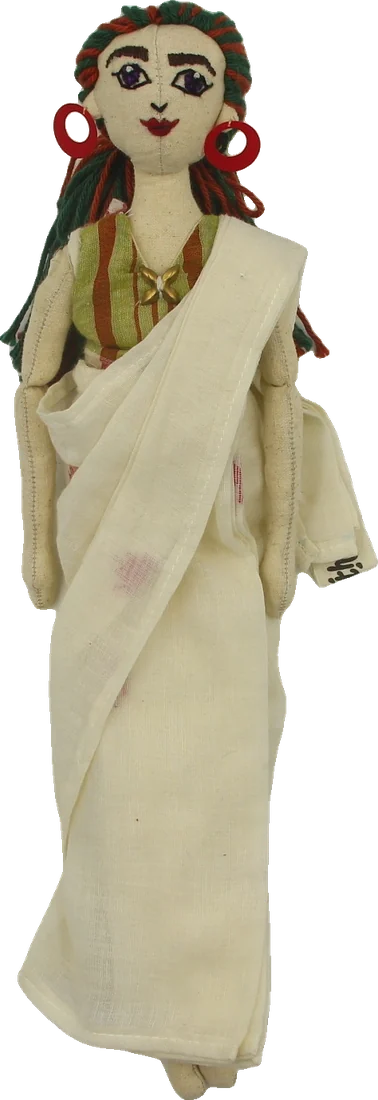
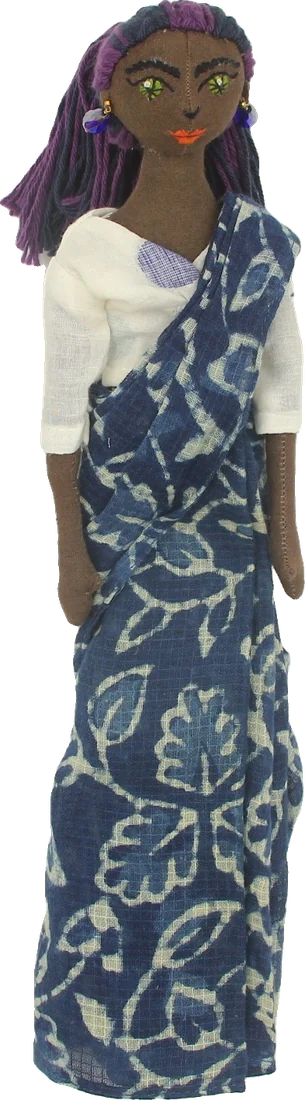
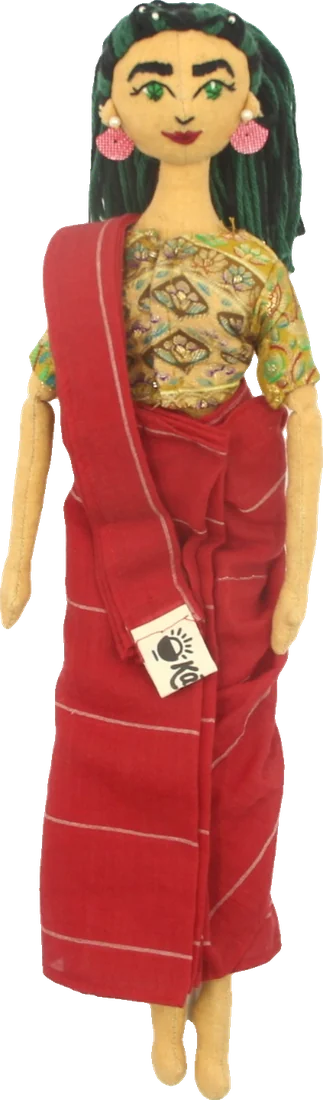
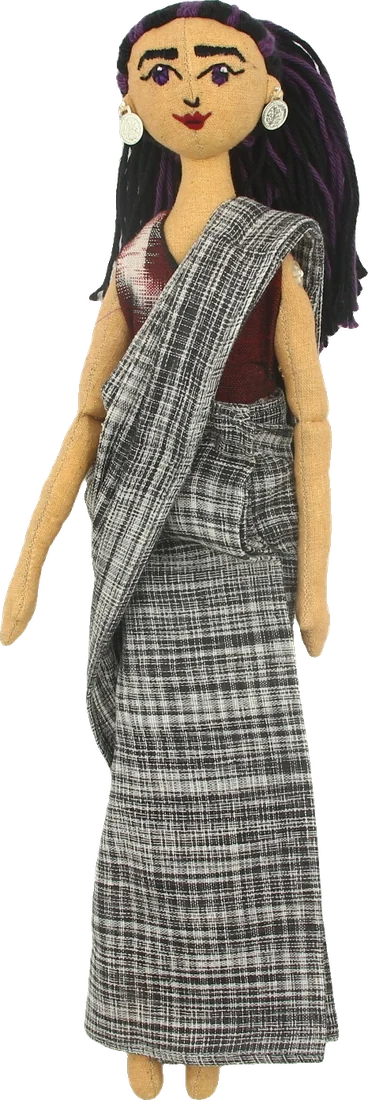
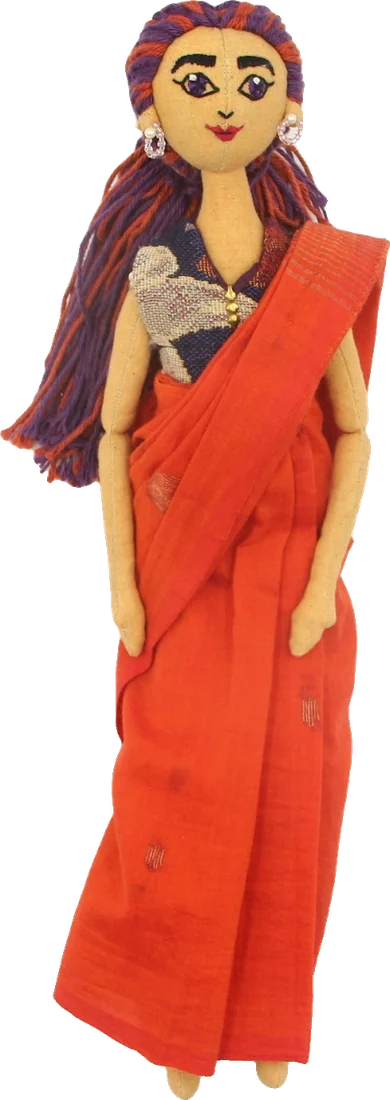
A face drawn by hand. Hair, one strand at a time. We call her Masakali: fifteen inches of cloth that already had a life. No two are ever the same.
Narrated by Ridhima Jaiswal · music: Indian Sitar by JonasBlakewood (Pixabay)
One brand, two crafts,
fourteen years of handloom.
Handloom saris that sustain weavers, and handmade dolls that give their leftover cloth, and local women, a second story.
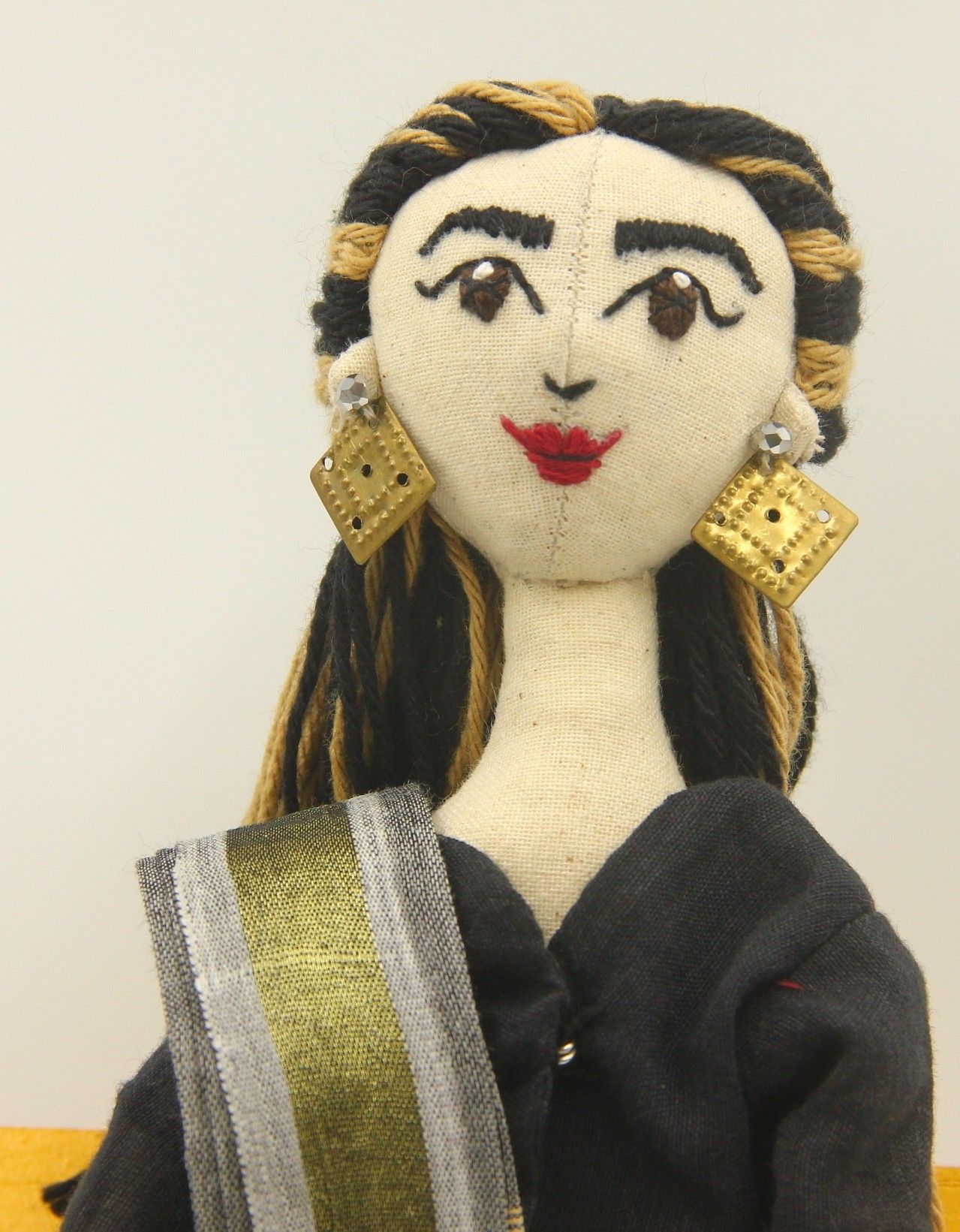
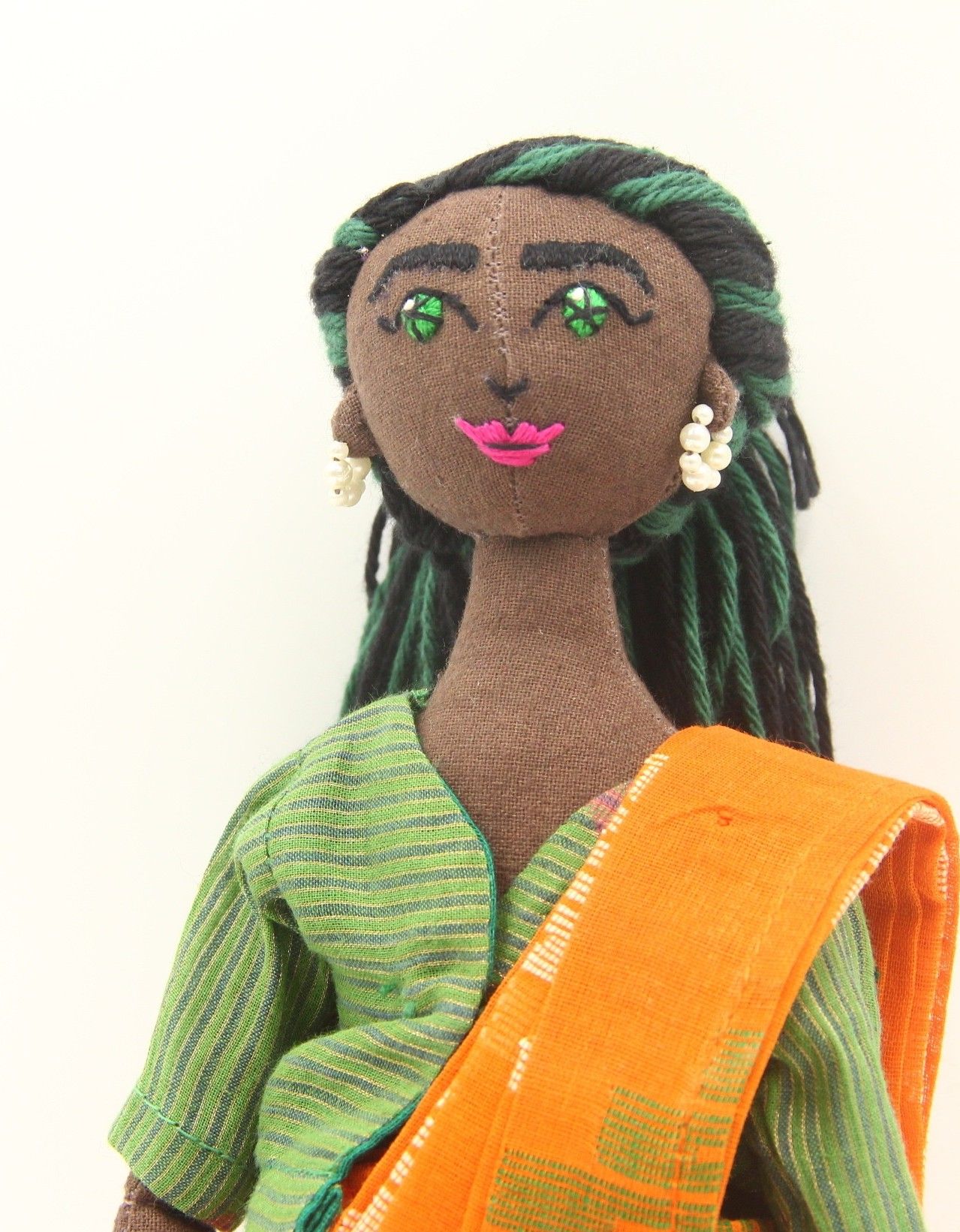
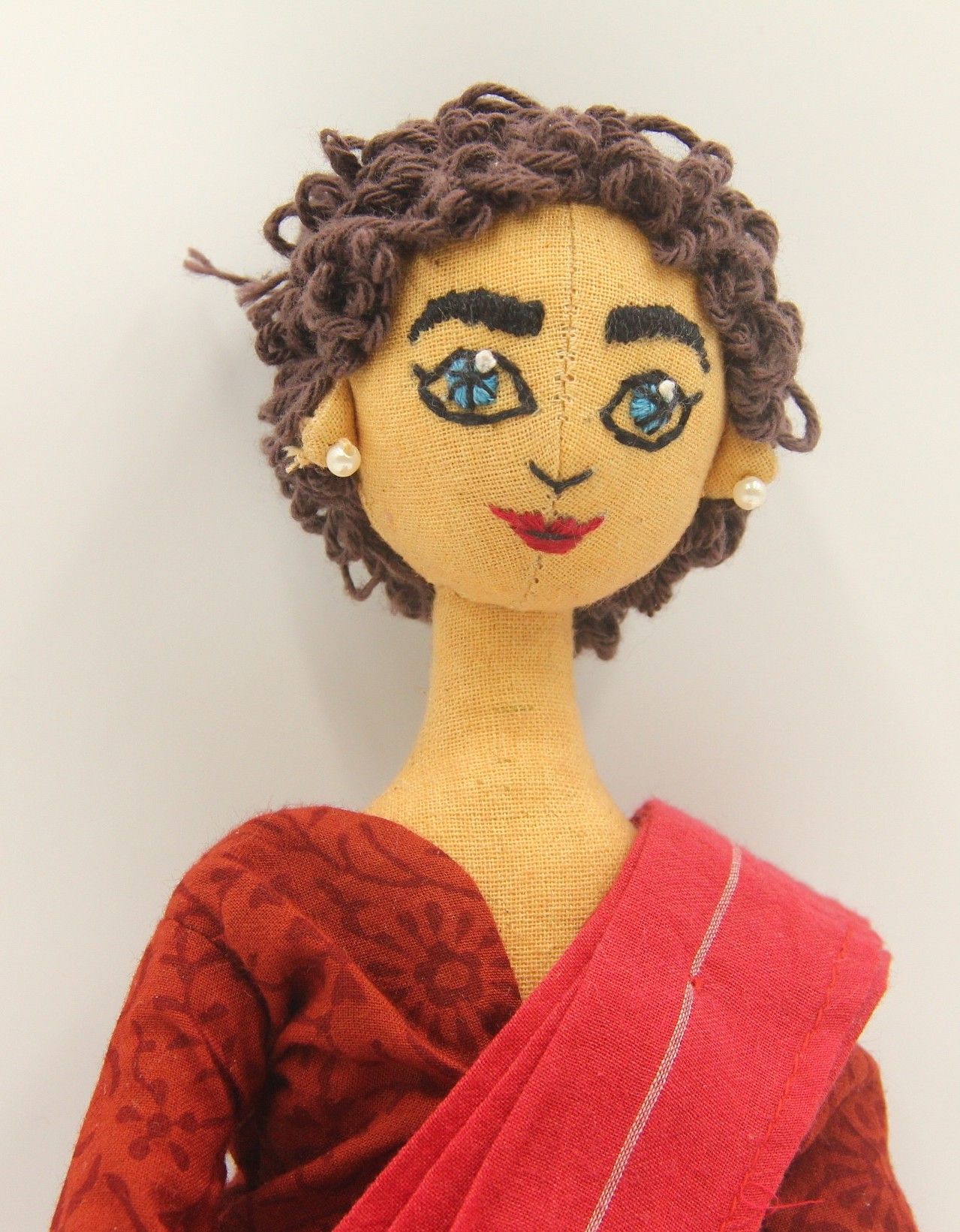
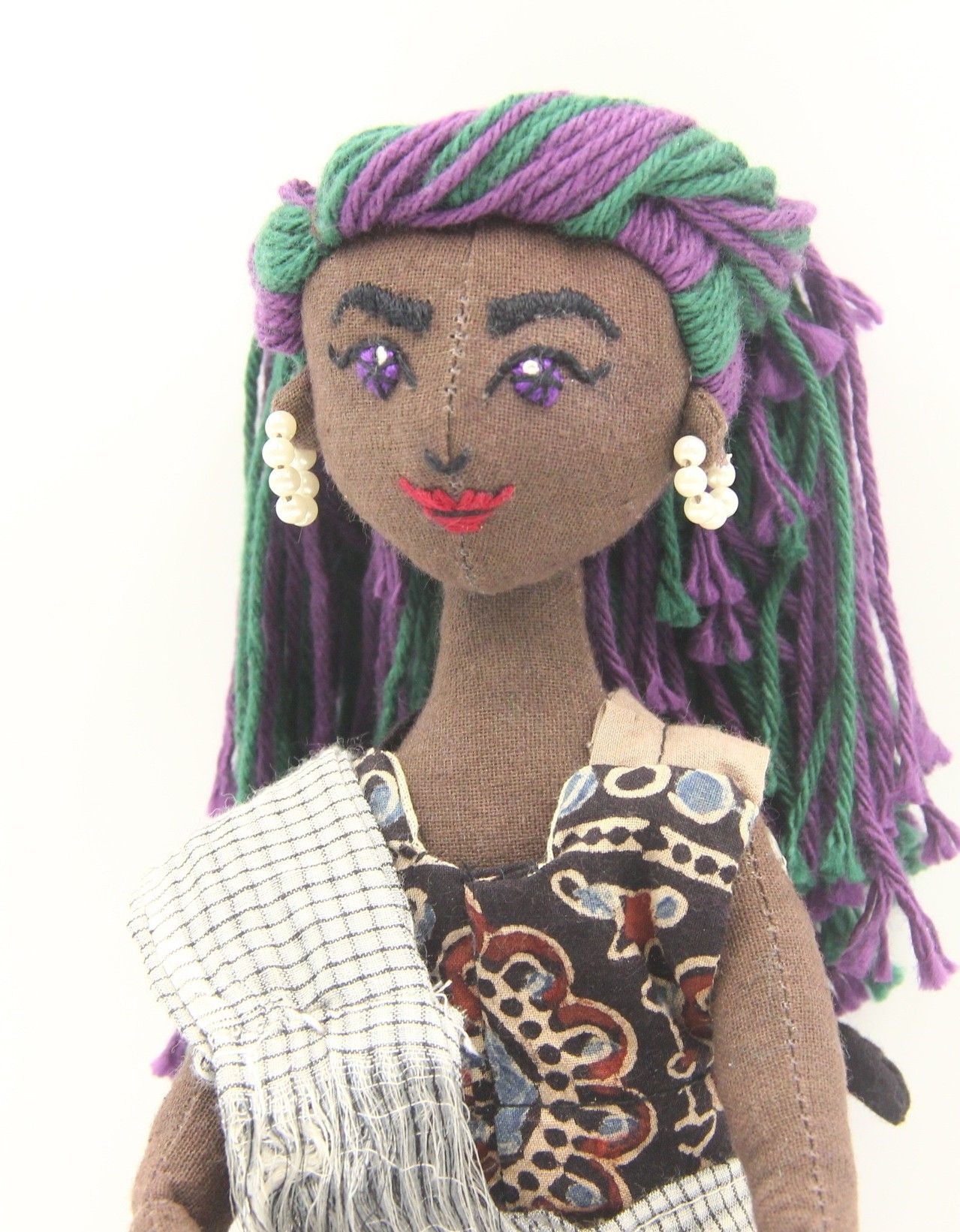
Masakali: a doll made from what the loom leaves behind.
A 15-inch hand-stitched collector’s doll, dressed in a miniature sari cut from weaver rejects, tailor off-cuts and donated handloom. It is a keepsake for adults and a playful introduction to India’s textiles for children.
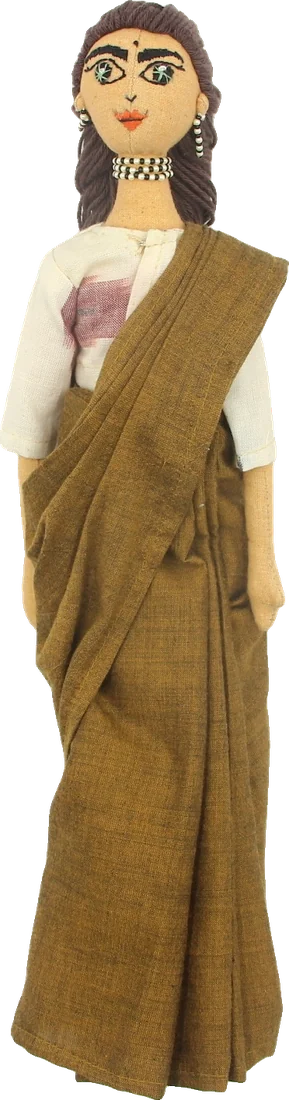
A grandmother’s habit, reimagined as a studio.
Indian grandmothers stitched dolls from leftover sari scraps long before anyone called it zero waste. Project Masakali brings that habit back as a practice. It began with six months of research and prototyping — redrawing the body, the face and the miniature drape until the doll could be made well by hand, and taught to others.
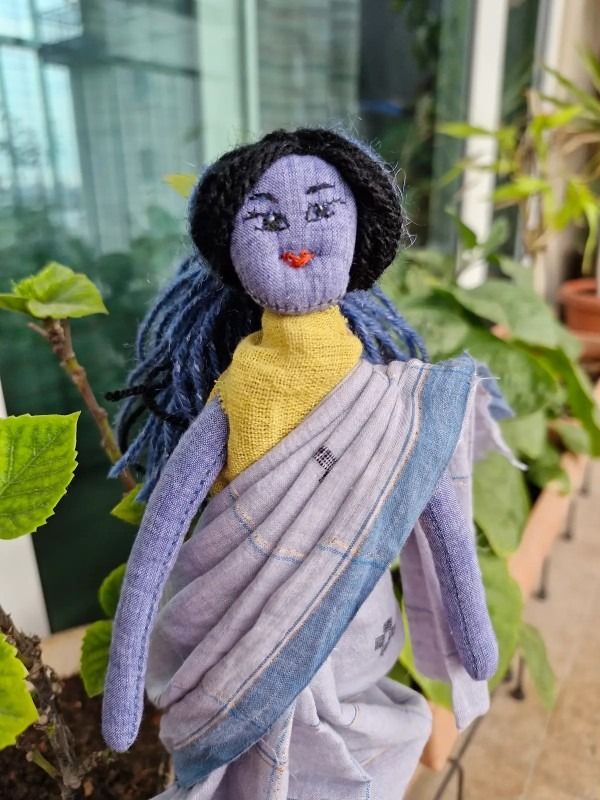
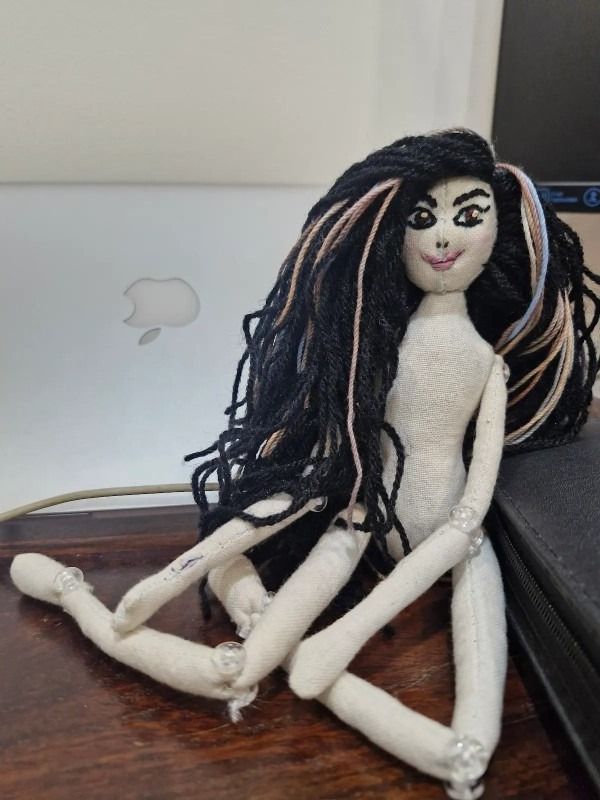
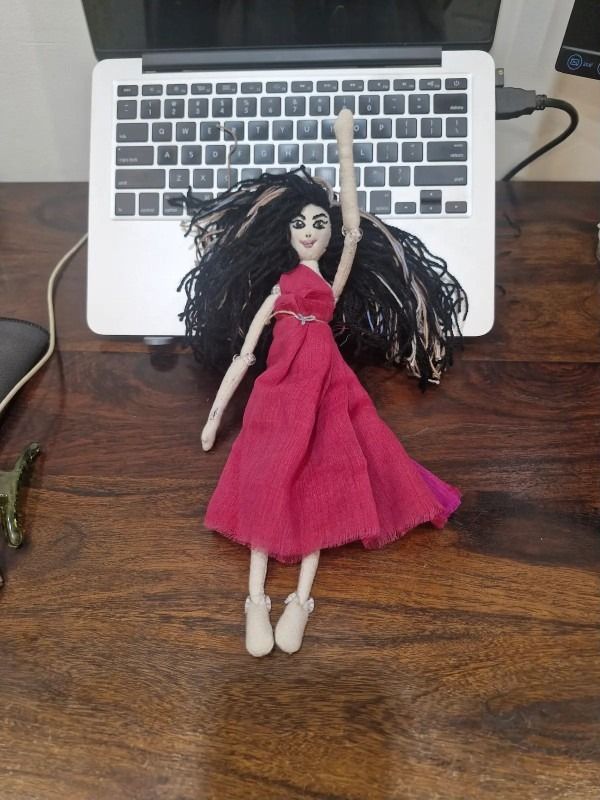
“Scaling a six-yard sari to a 15-inch canvas isn’t about cutting the fabric smaller. It is re-engineering the physics of the drape.”Ridhima Jaiswal
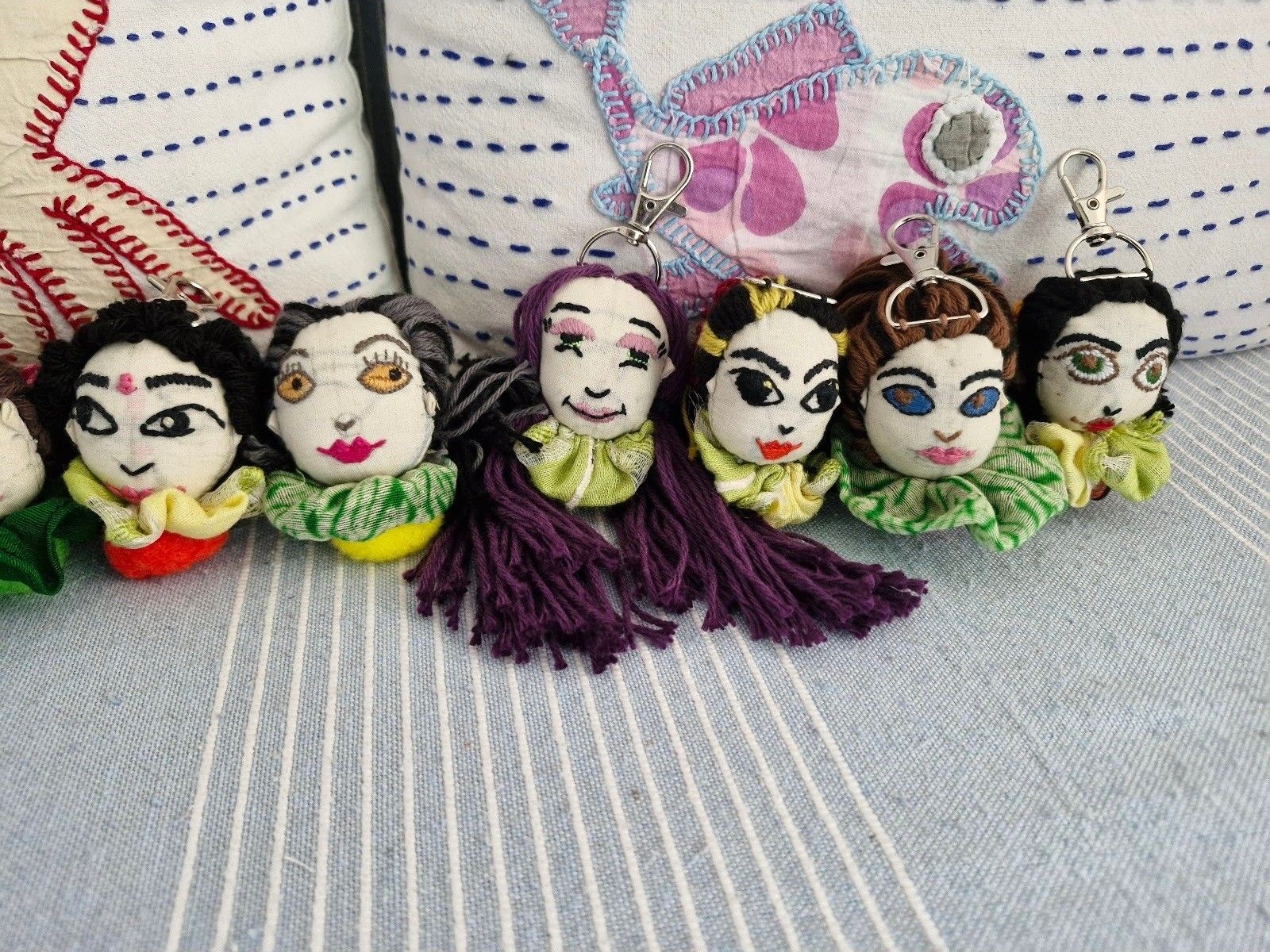
Nothing is wasted, not even practice.
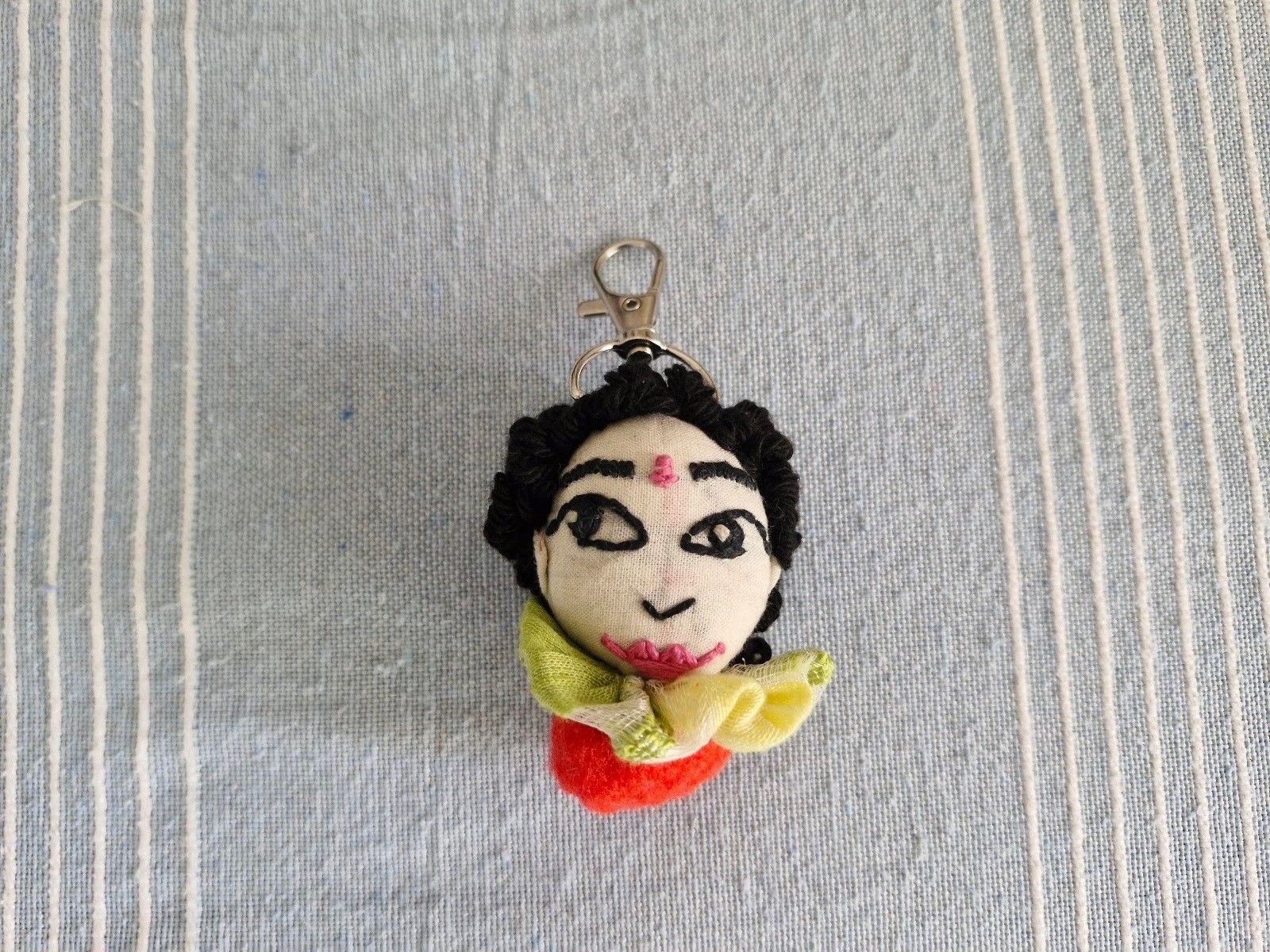
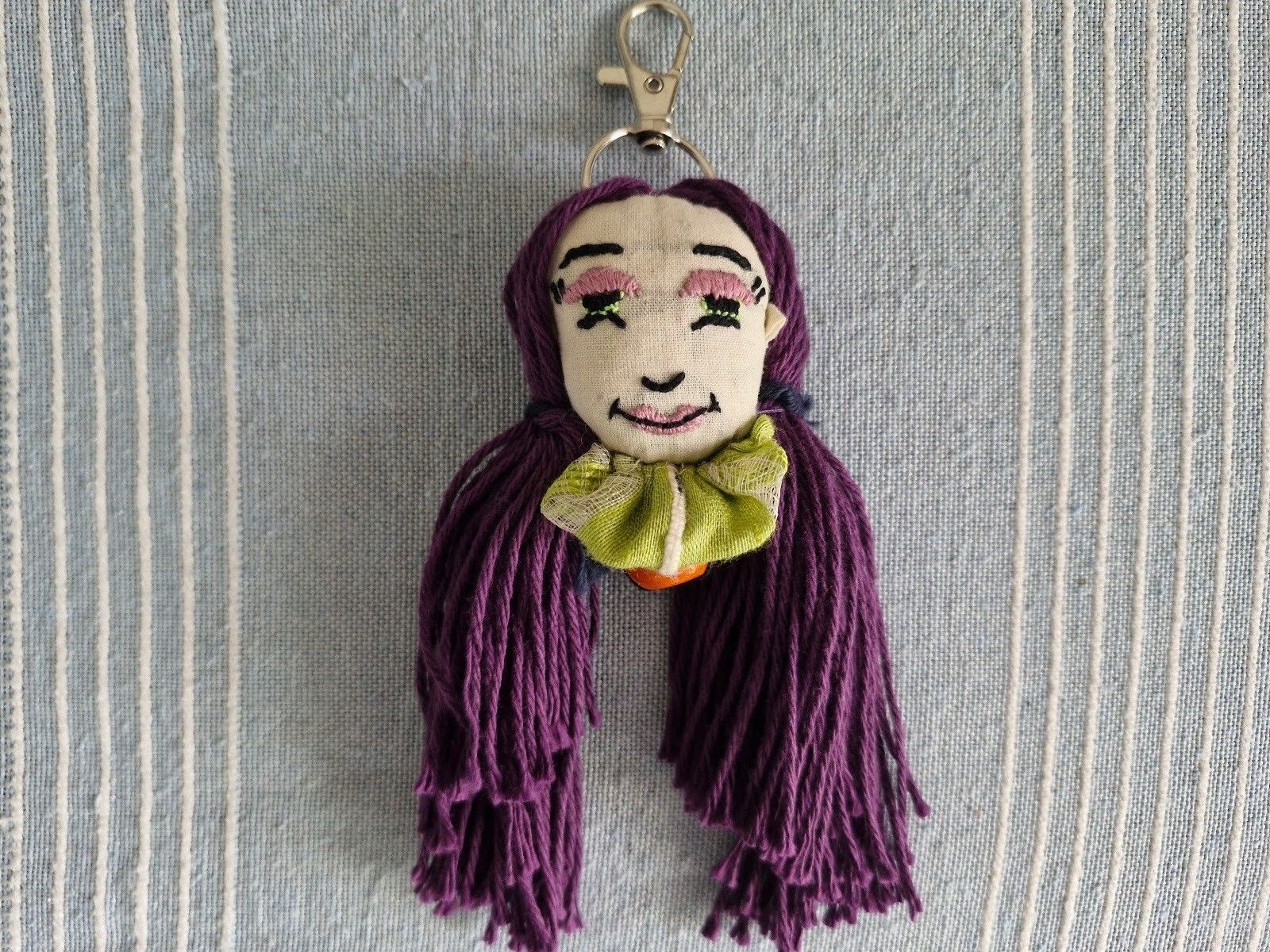
Shakl keyrings
Faces embroidered by artisans in training become keyrings, so learners earn from their very first stitches.
Magnets
Miniature faces and figures stitched from the smallest remnants.
BroochesNew
Wearable handloom scraps: our newest zero-waste line.
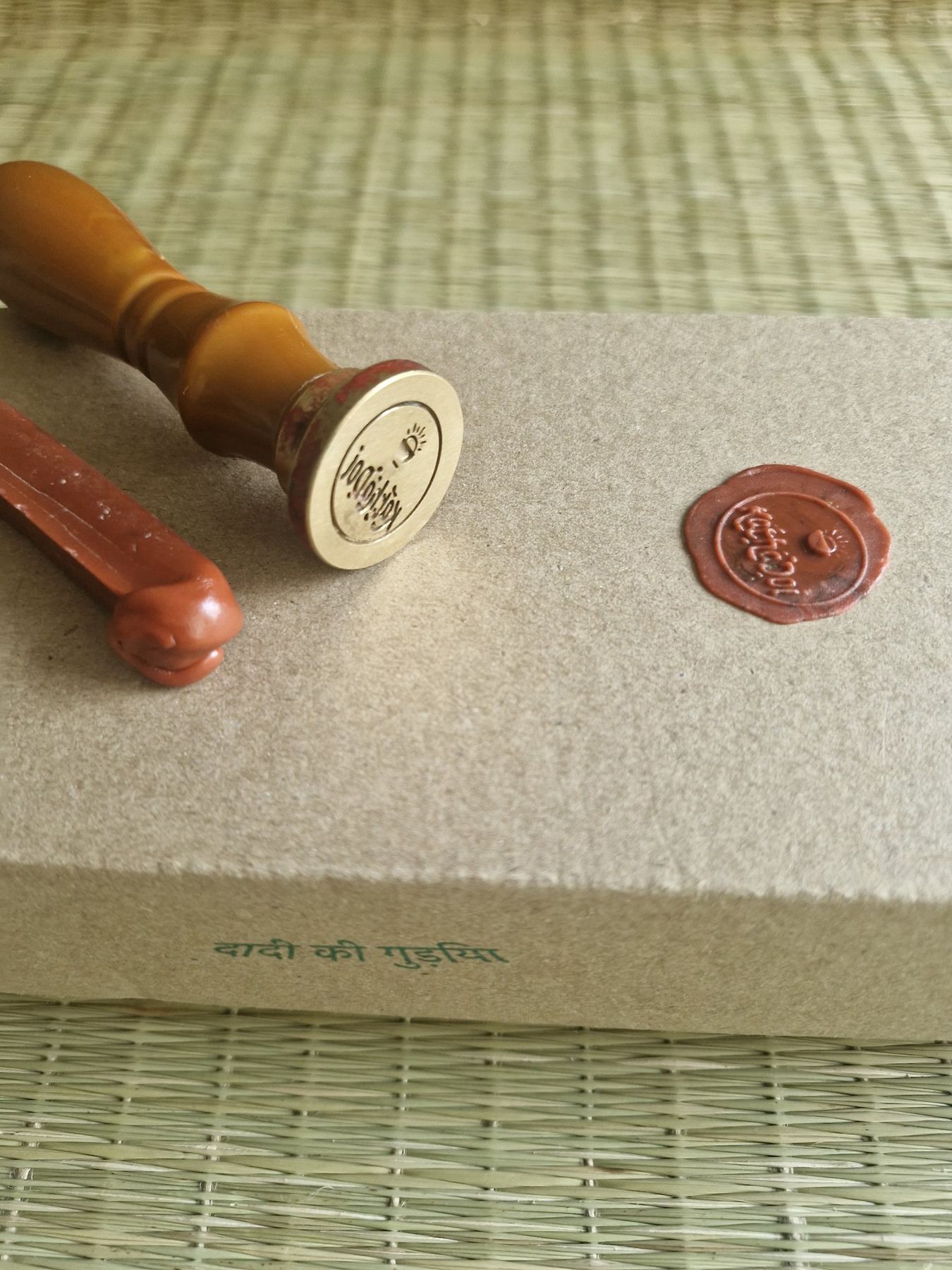
Packaging
Unprinted recyclable boxes, hand-stamped and sealed with red shellac.
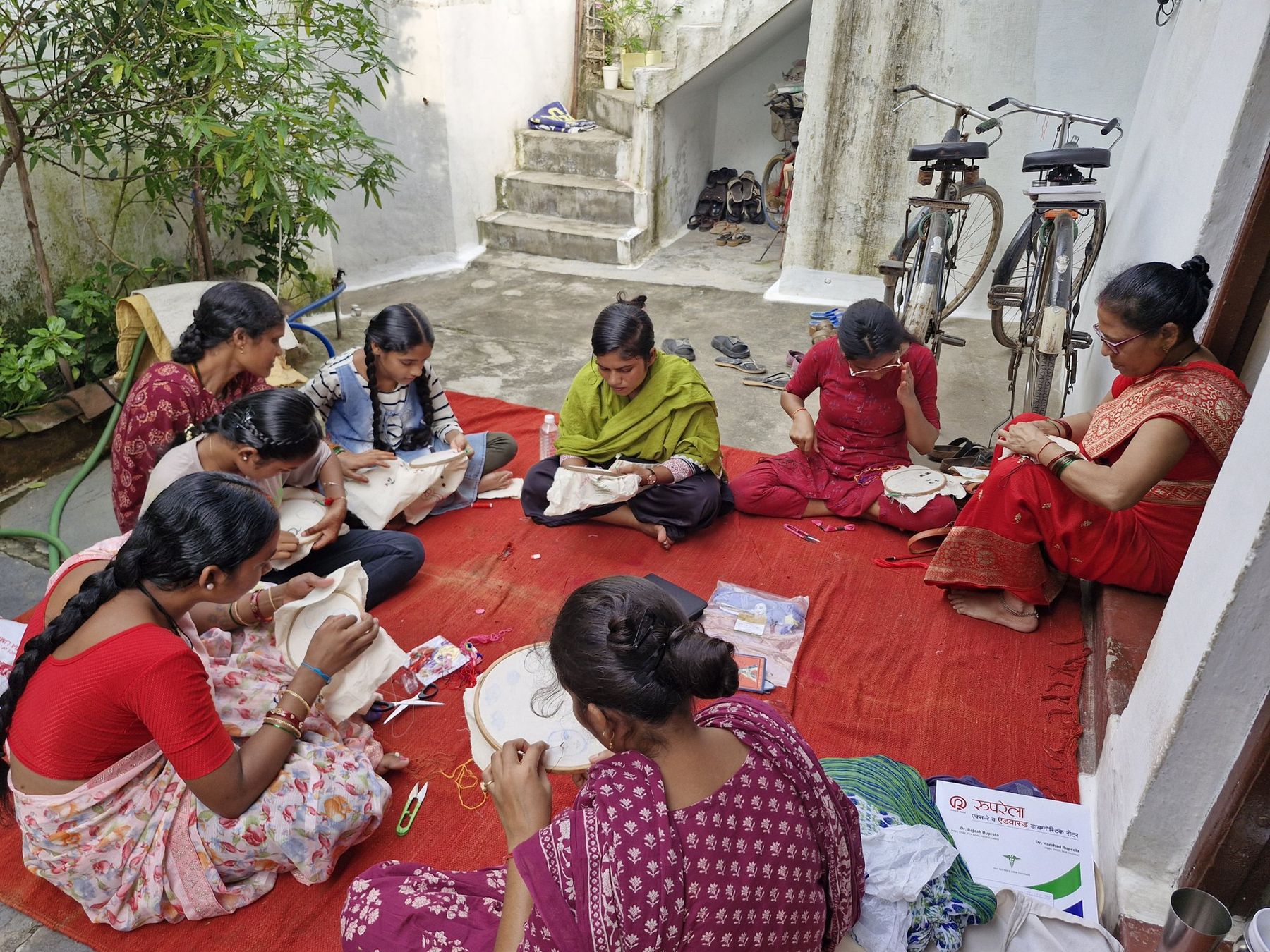
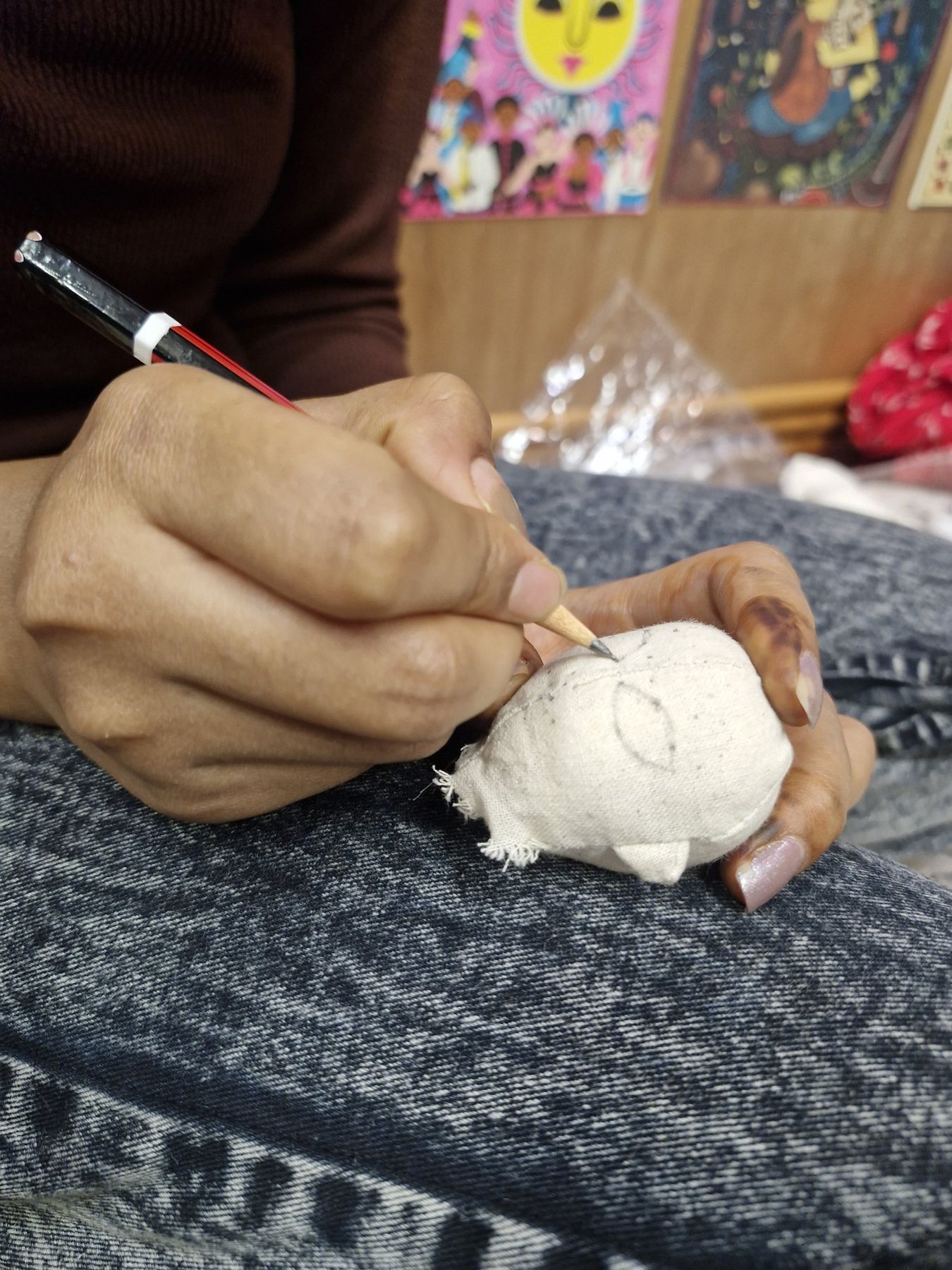
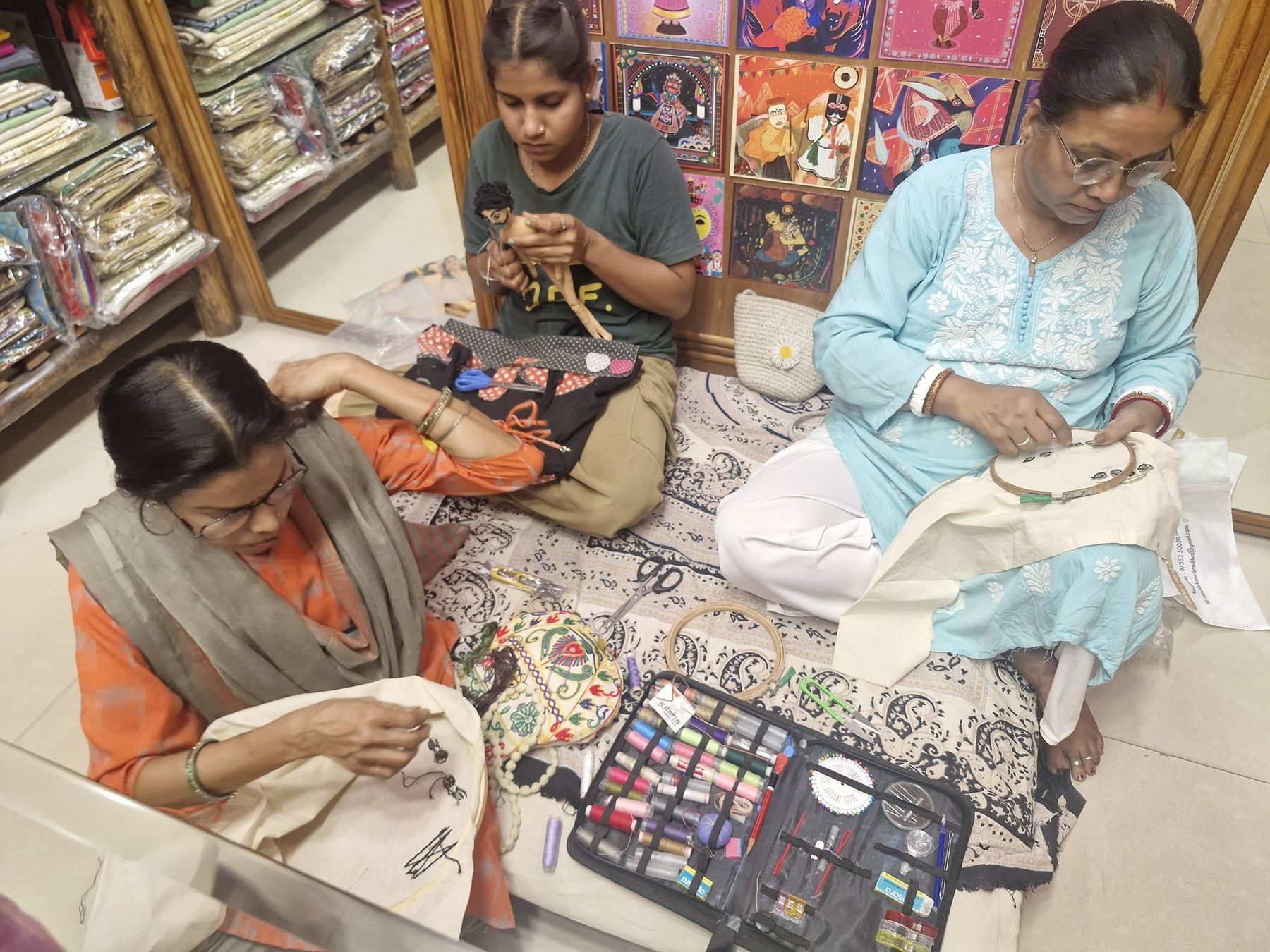
Building a new artisan community, one woman at a time.
Learn
Basic hand stitches, taught in our Raipur workshop
Earn while learning
Practice faces become Shakl keyrings, so training is paid
Make
Trace, stitch, fill and assemble the full doll
Create
Freedom to choose each doll’s hair, eyes and lips
“A defect implies a machine made a mistake. A birthmark proves a human made a creation.”Ridhima Jaiswal
One loop, zero waste.
Our sari business and our doll studio are one system: what the loom and the tailor leave behind becomes the next product.
Garments
Weaver seconds, tailor off-cuts and donated handloom saris
Body
Latha cotton from Raipur’s textile market
Filling
Recycled fabric fibre, sourced locally
Packaging
Unprinted recyclable boxes, shellac-sealed
Even the micro-scraps left from assembly are kept, and become the next prototype.
- The weaver’s loomBengal, Assam, Gujarat, Banaras
- Handloom sarisold at KathaDoi Handloom
- Seconds & off-cutsweaver rejects, tailor scraps, donated saris
- Masakali dollminiature saris, blouses, petticoats
- Micro-scrapsShakl keyrings, magnets, brooches, prototypes
- Stories sharednew demand for handloom
Saris by fibre
Three natural fibre families (cotton, silk and linen), often blended on the loom, one yarn in the warp and another in the weft.
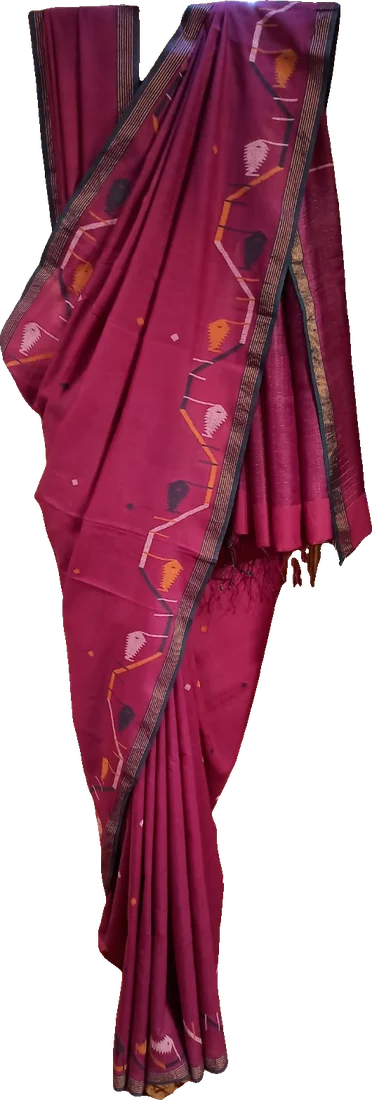
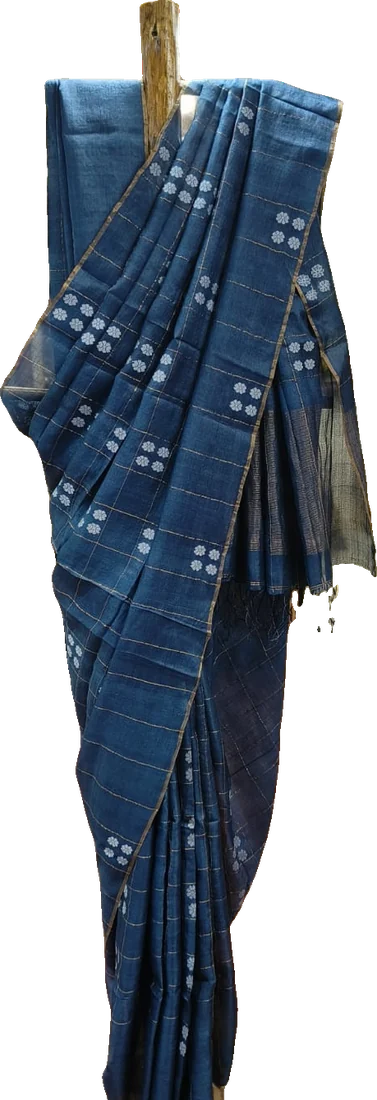
Khadi Cotton
Hand-spun and hand-woven; breathes in every season.
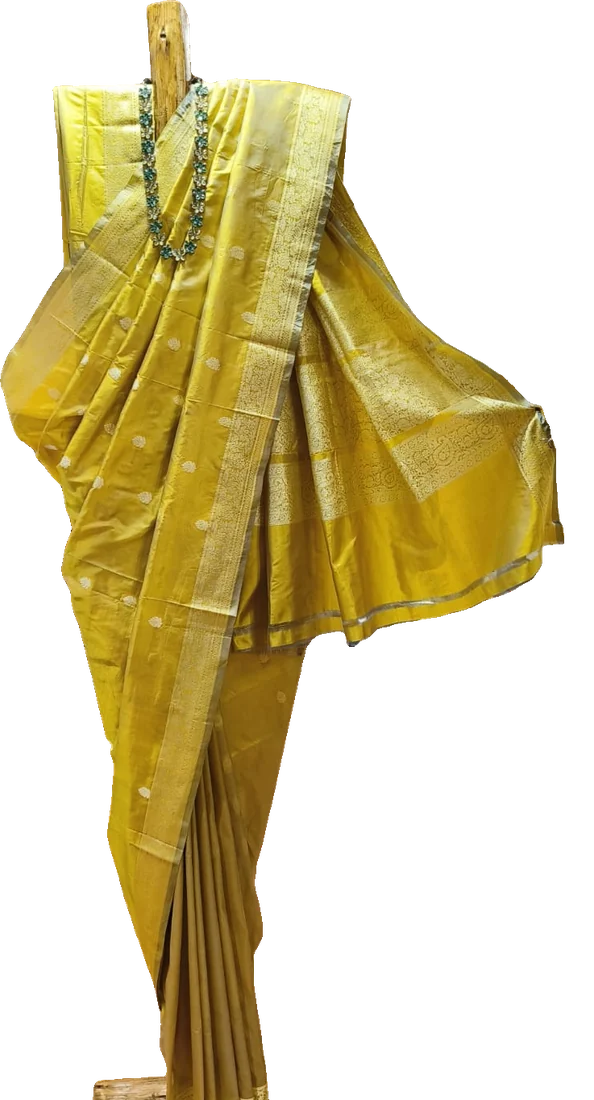
Mulberry Silk
Fine, lustrous and fluid; theic silk for occasion wear.
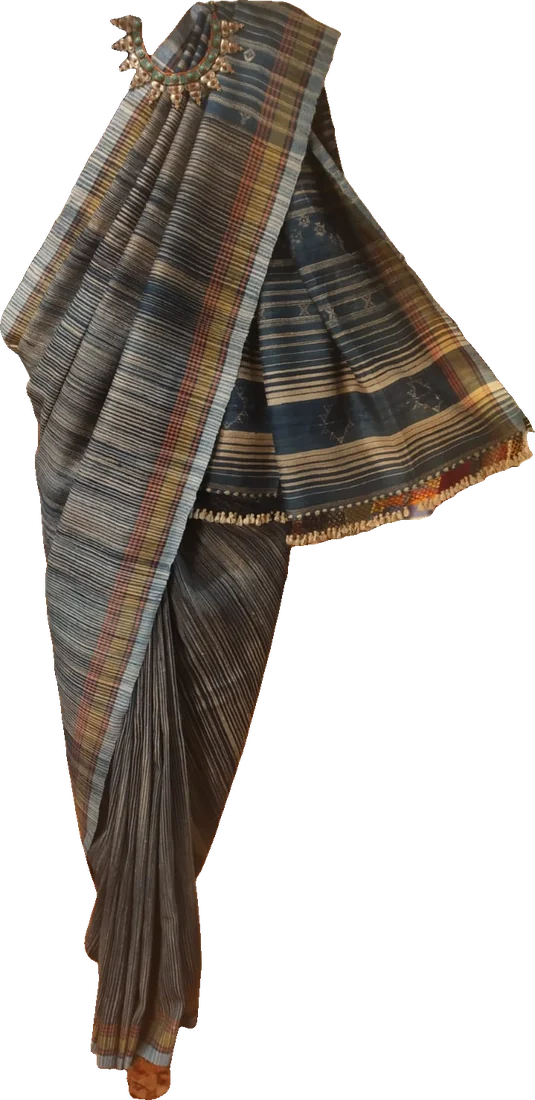
Ghicha Silk
Hand-reeled from tussar cocoon waste; matte with a nubby slub.
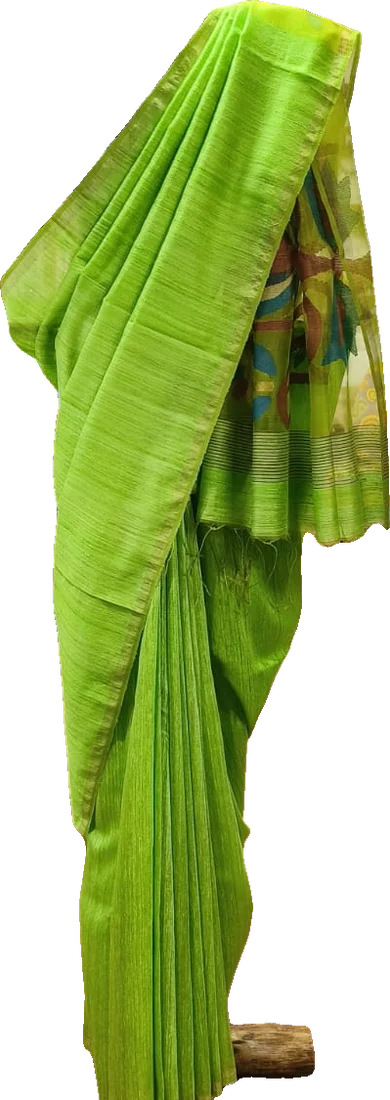
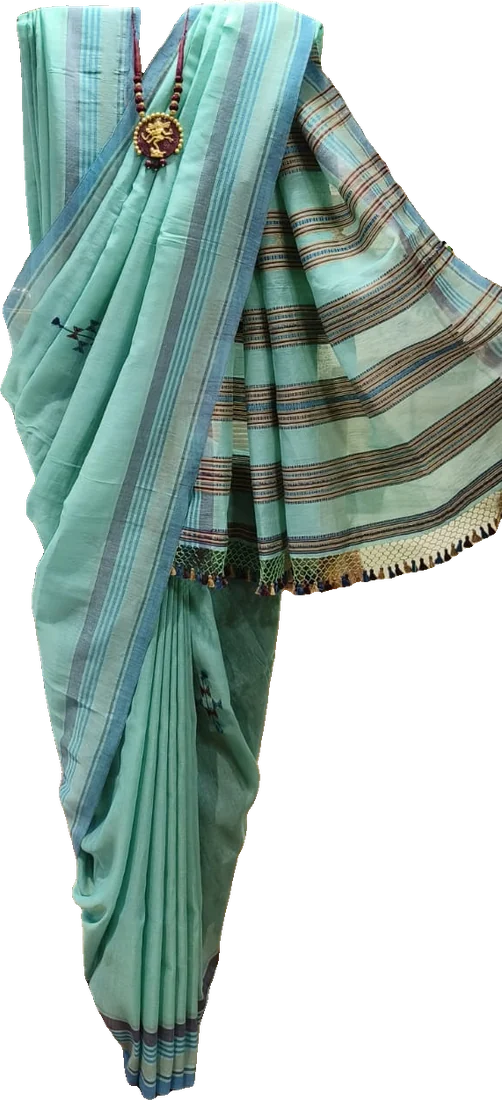
Linen
Flax fibre, graded by count; crisp with a soft fall.
Swipe to see more →
Saris by craft
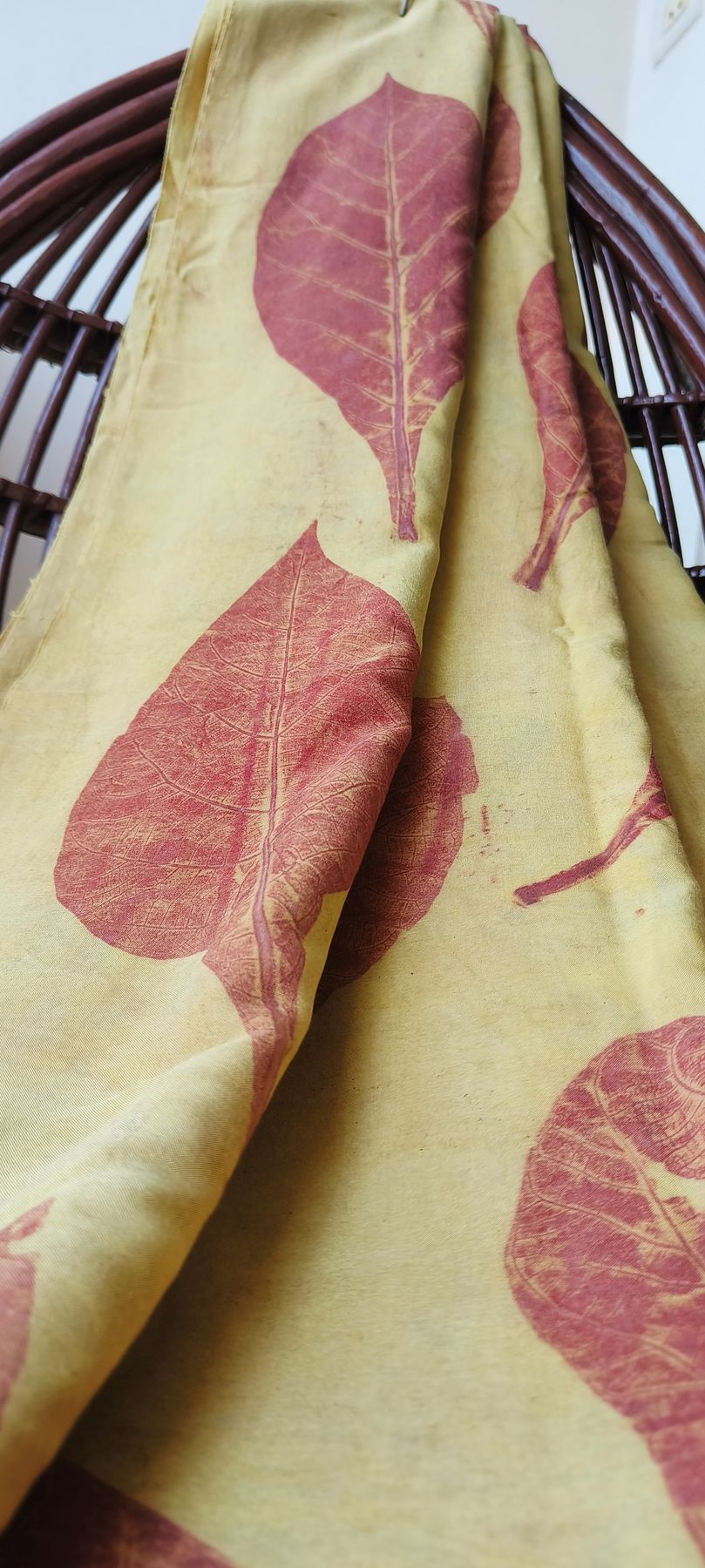
Each fibre meets a regional technique, from the weaver’s extra-weft motifs to leaves pressed into silk.
 Signature collection
Eco Print
Windfall leaves steamed into eri silk, silk khadi and linen. Nature’s own print, never repeated.
Jamdani
Hand-inlaid motifs on tussar, mulberry silk, silk muslin and khadi cotton.
Dolls in Jamdani →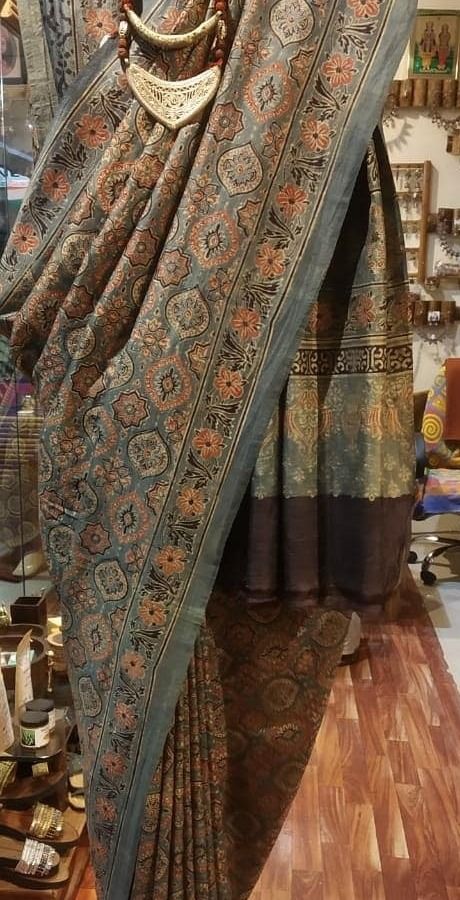
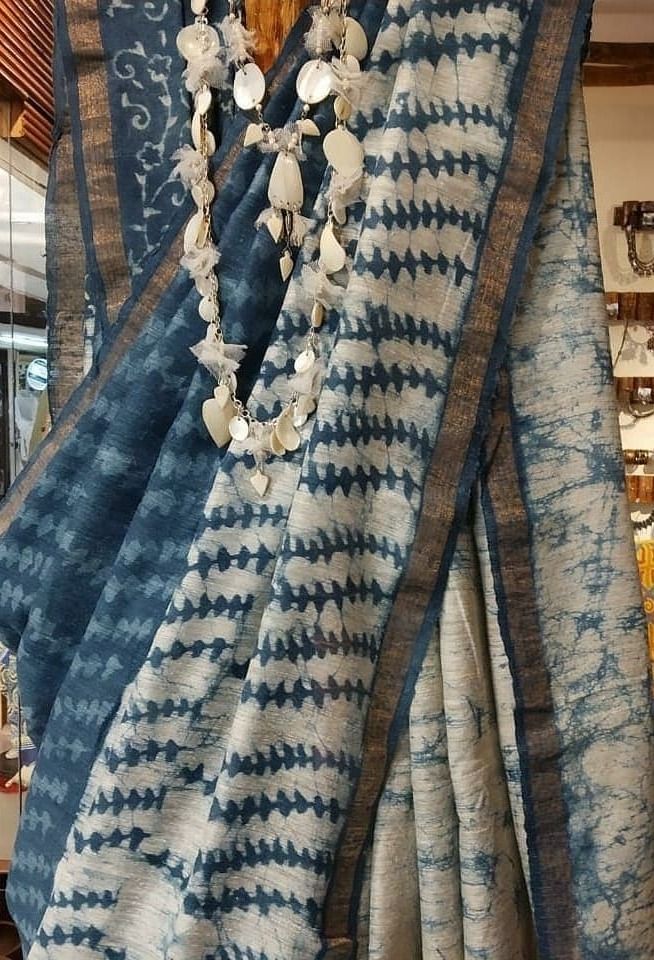
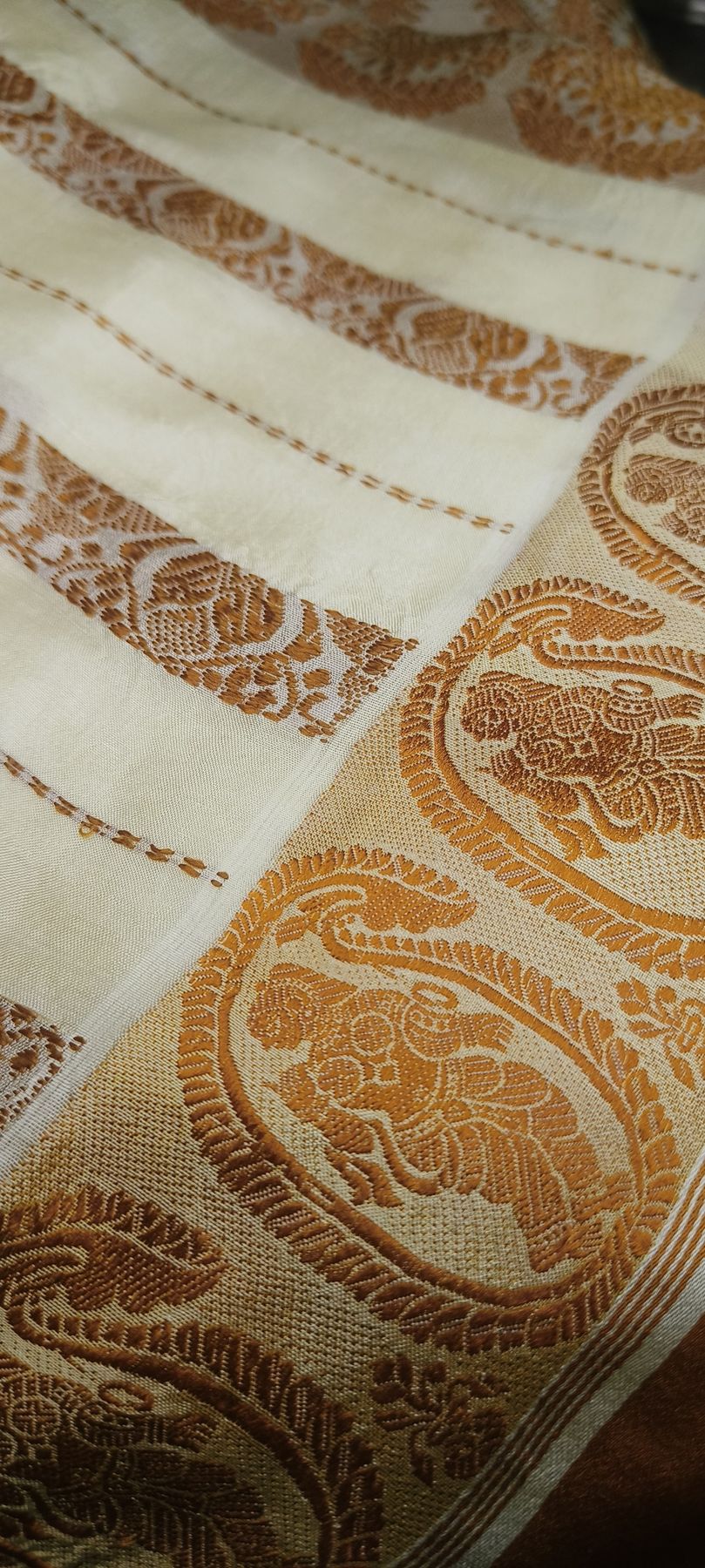
Garad (Gorod) Silk
Undyed ivory silk with a bold border and paisley, figurine and floral bootis.
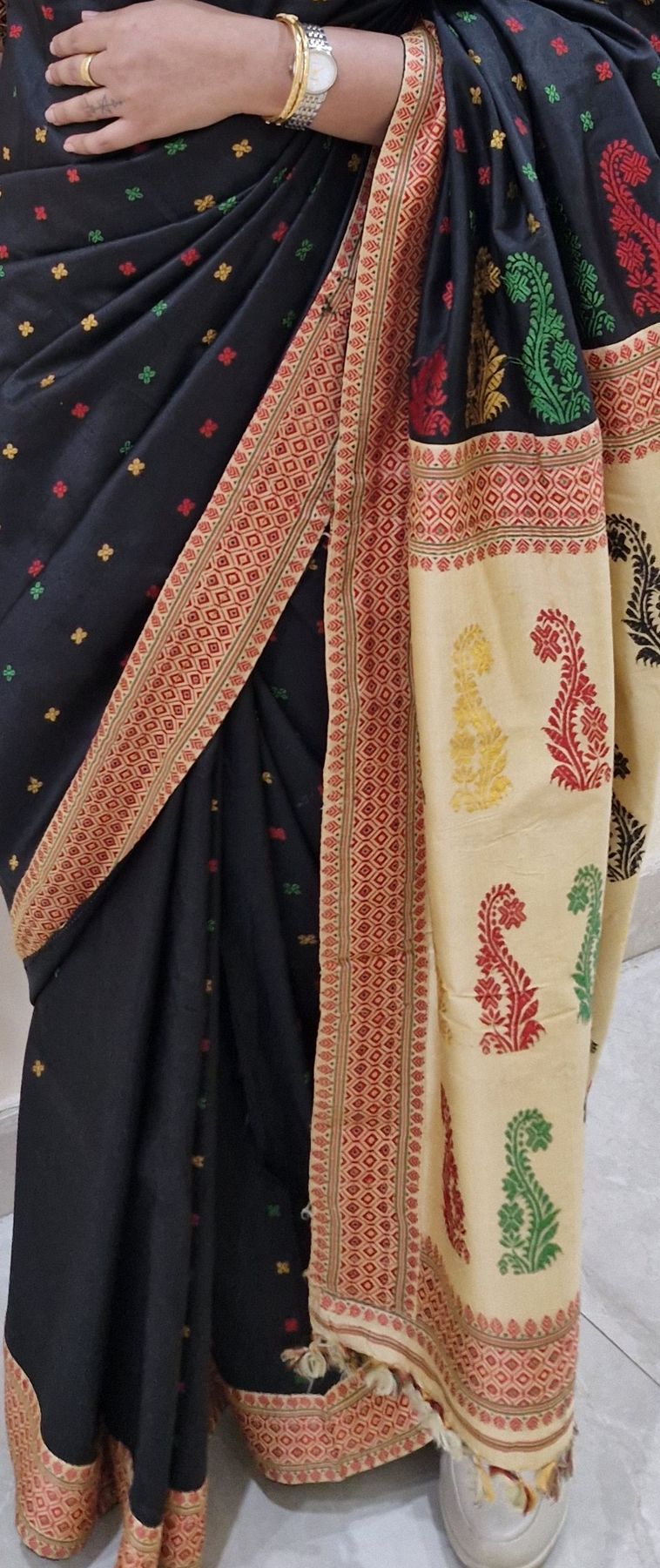
Paat Silk
Assam’s mulberry silk, woven with traditional Assamese motifs.
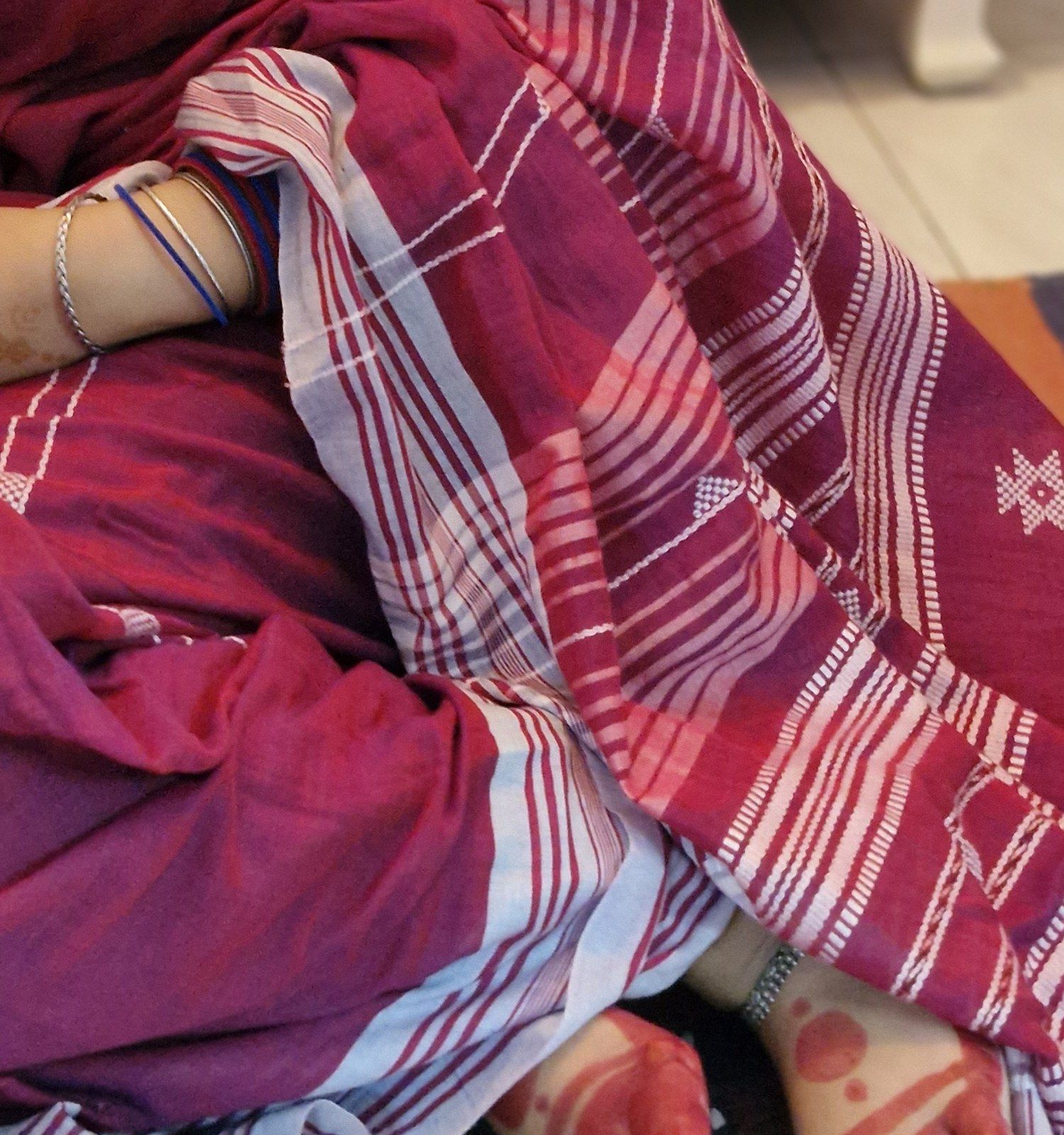
Bhujodi
Extra-weft weaves by Kutch’s Vankar weavers, often in indigenous Kala cotton.
Swipe to see more →
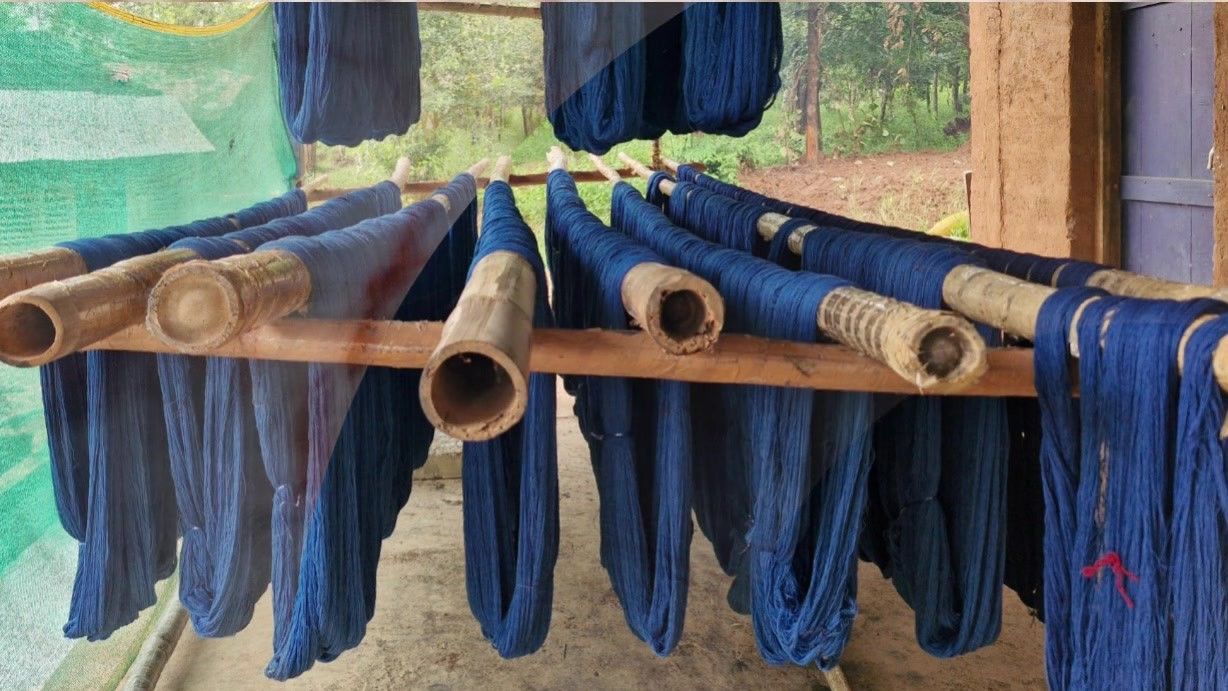
We buy from the hands that weave.
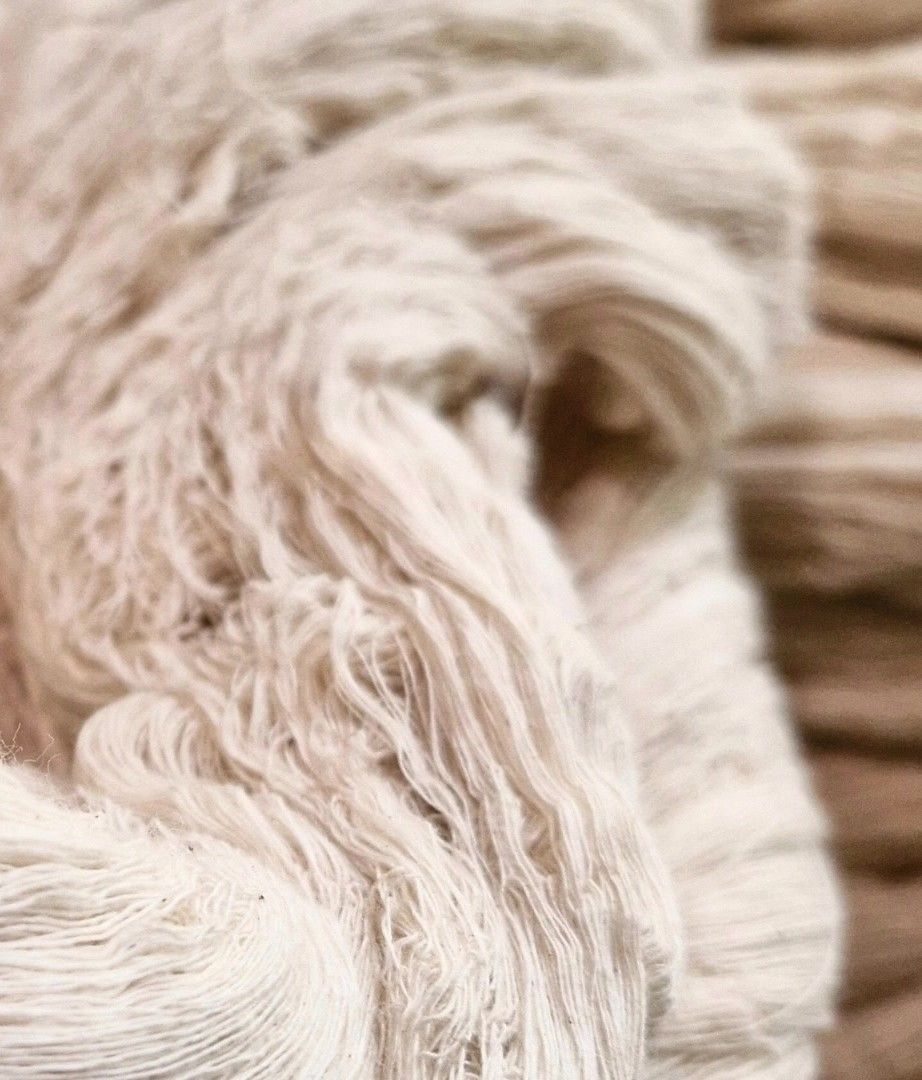
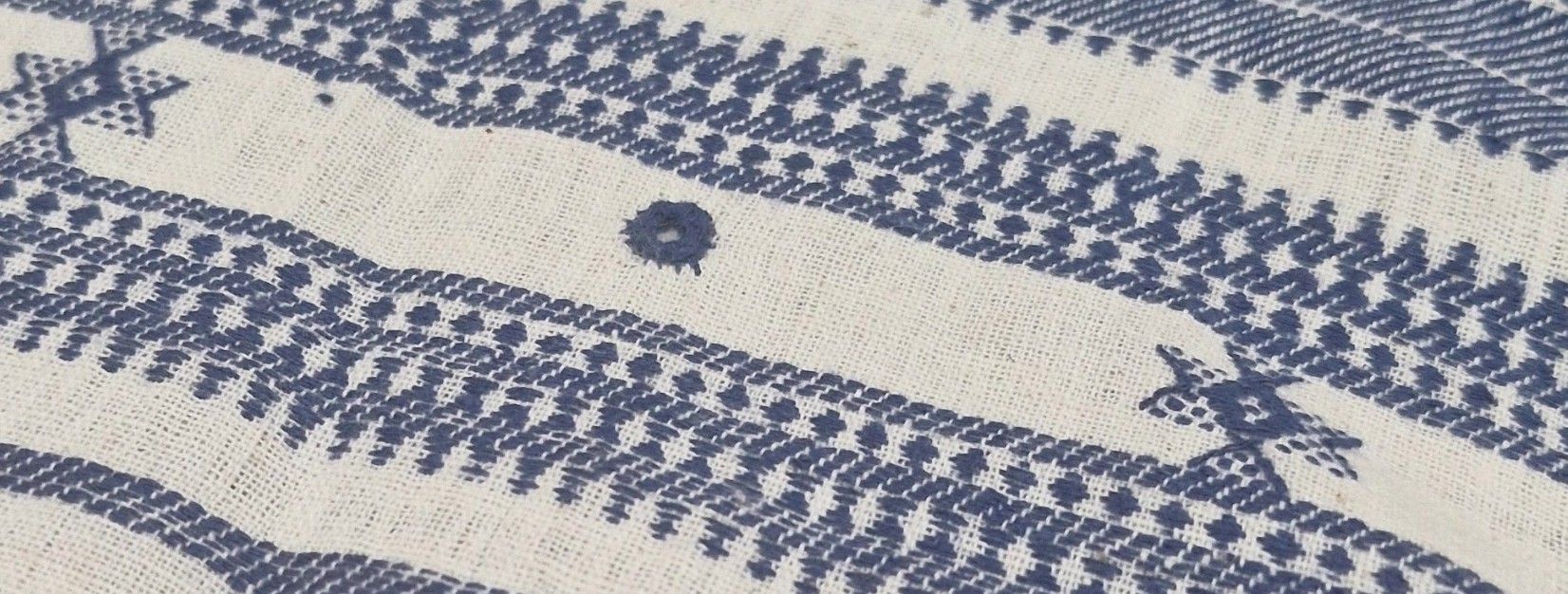
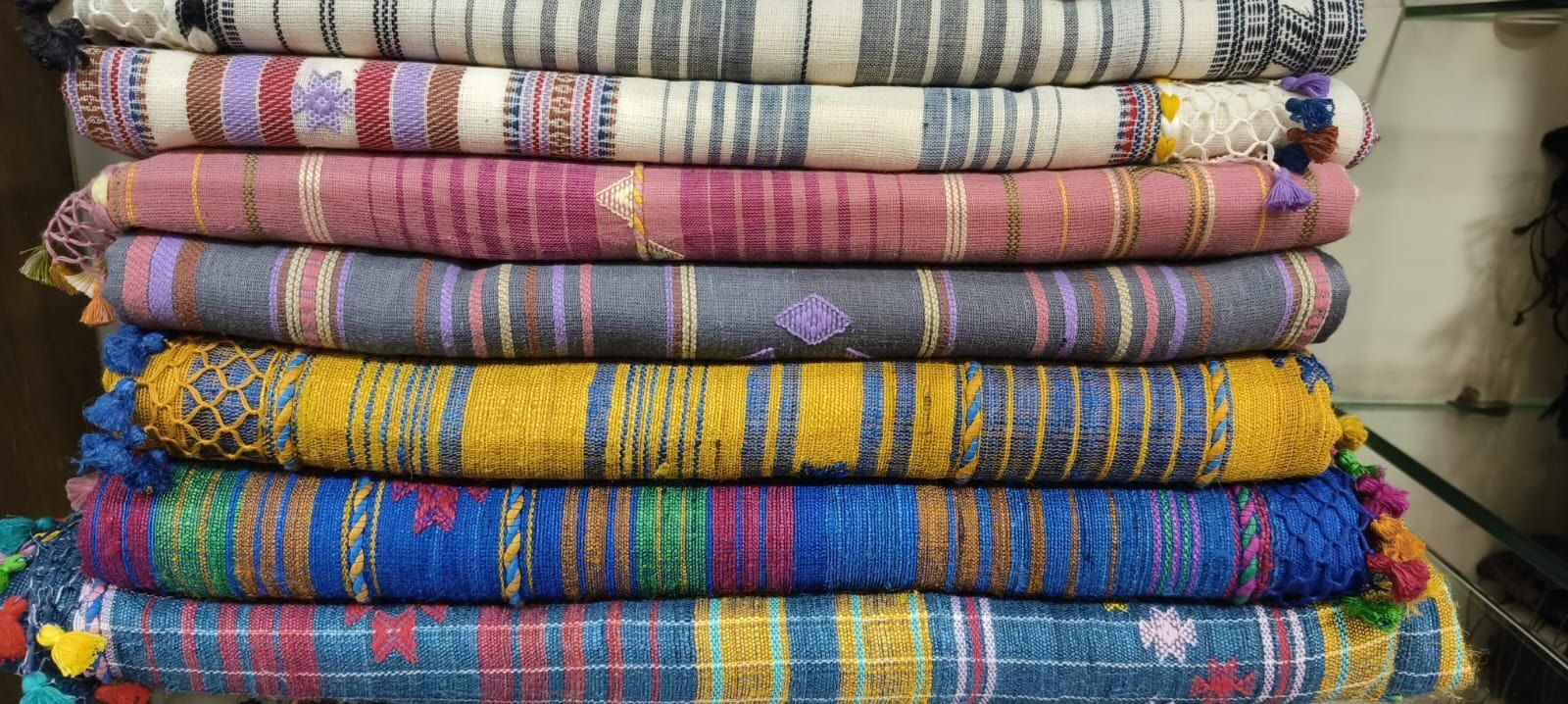
For 14 years we have sourced directly from weaver families, choosing yarn and designs together, paying fairly and buying their seconds: lengths that miss commercial standards and now become Masakali dolls.
Rooted in Raipur, reaching the world.
Masakali dolls
Since 2025Handloom saris
Since 2012Online
kathadoi.comOur own store: every Masakali doll, browsable by weave and craft. Ships across India and internationally.
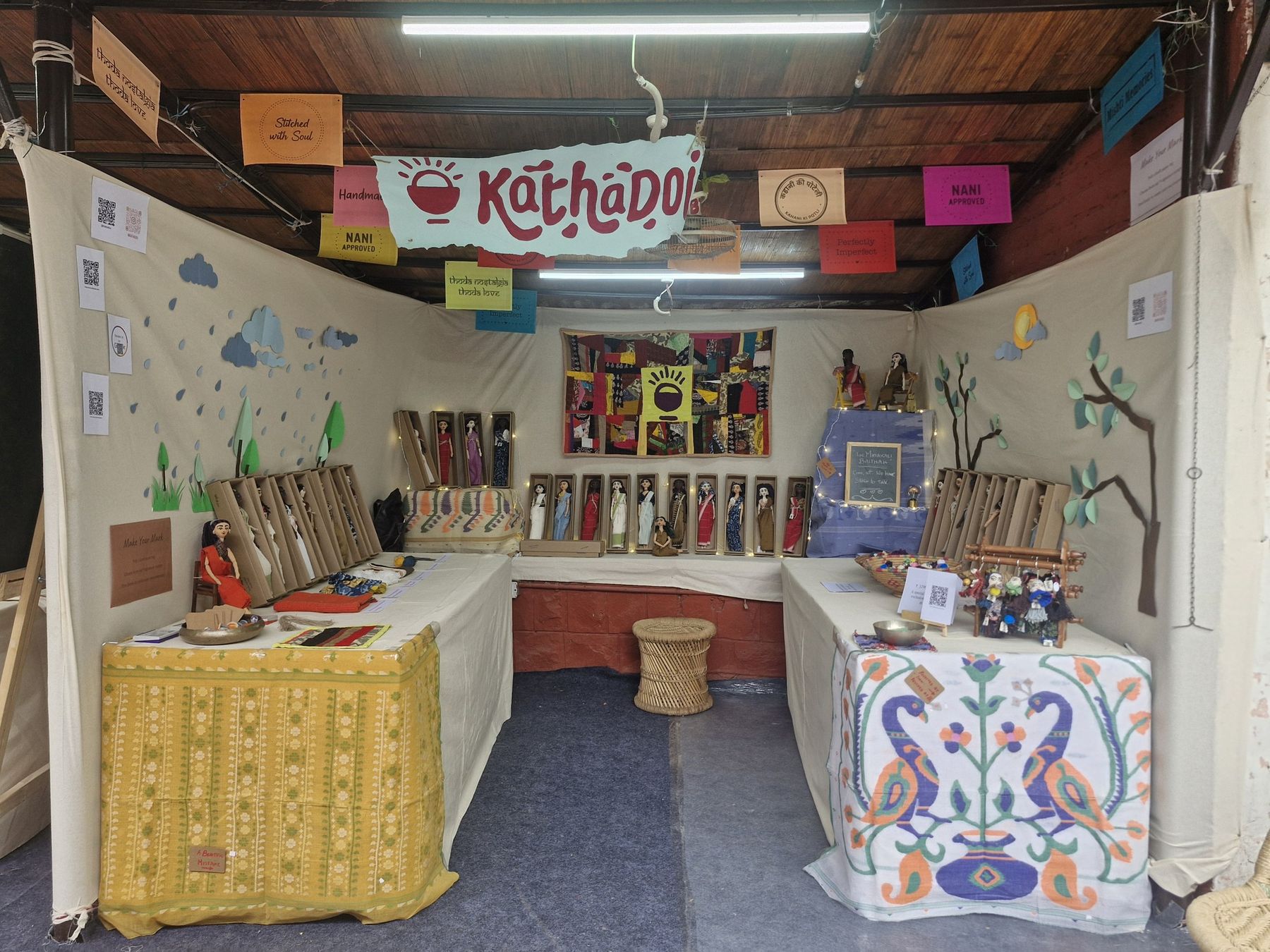
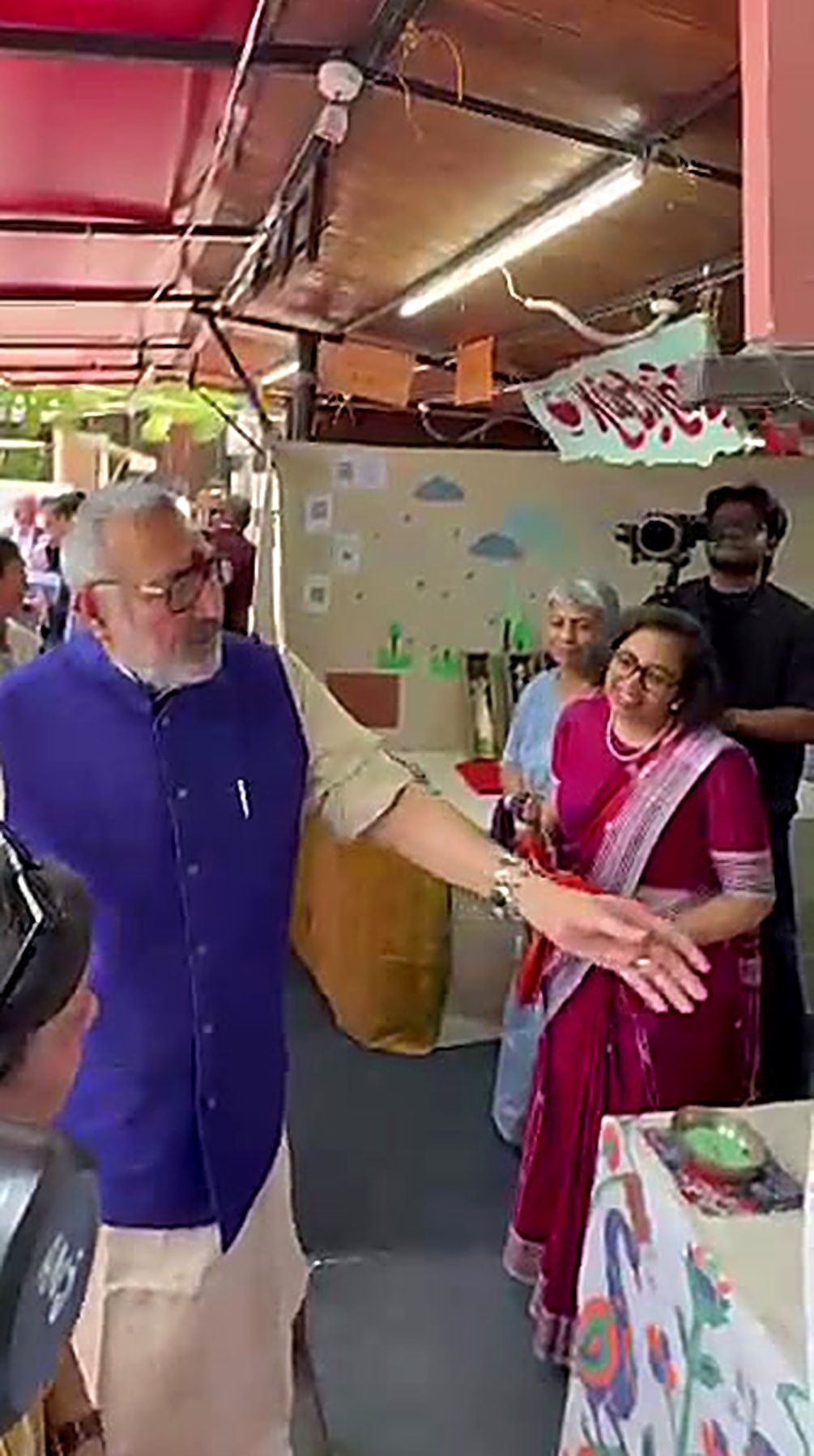
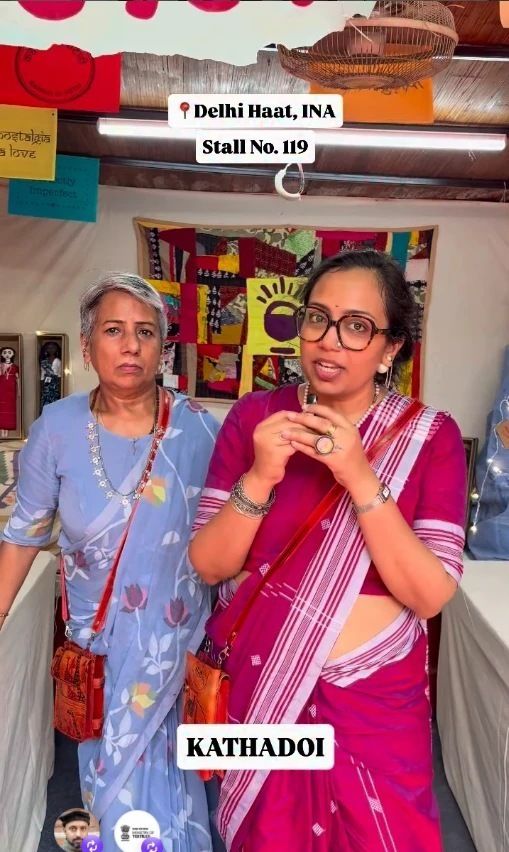
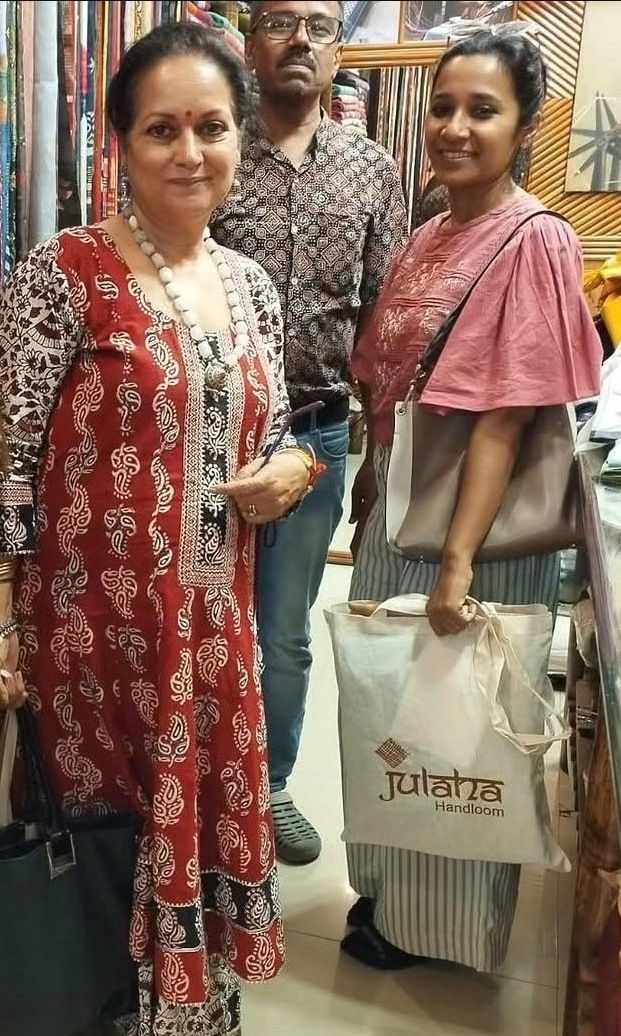
From Raipur to Dilli Haat.
Recognition & press
Credentials

Five ways to work with KathaDoi.
The dolls began as a way to use what the loom leaves behind, and to pay women for learning a craft. Everything below keeps both of those going.
Stock us
Museum shops, craft stores, design stores and children’s stores. We hold finished stock, so you are not waiting on production, and we can supply matched runs so a line stays reorderable.
Corporate and festive gifting
A gift that is handmade, Indian, and carries a story the recipient can retell. Tell us the quantity and the date, and we will confirm what is possible.
Exhibitions and pop-ups
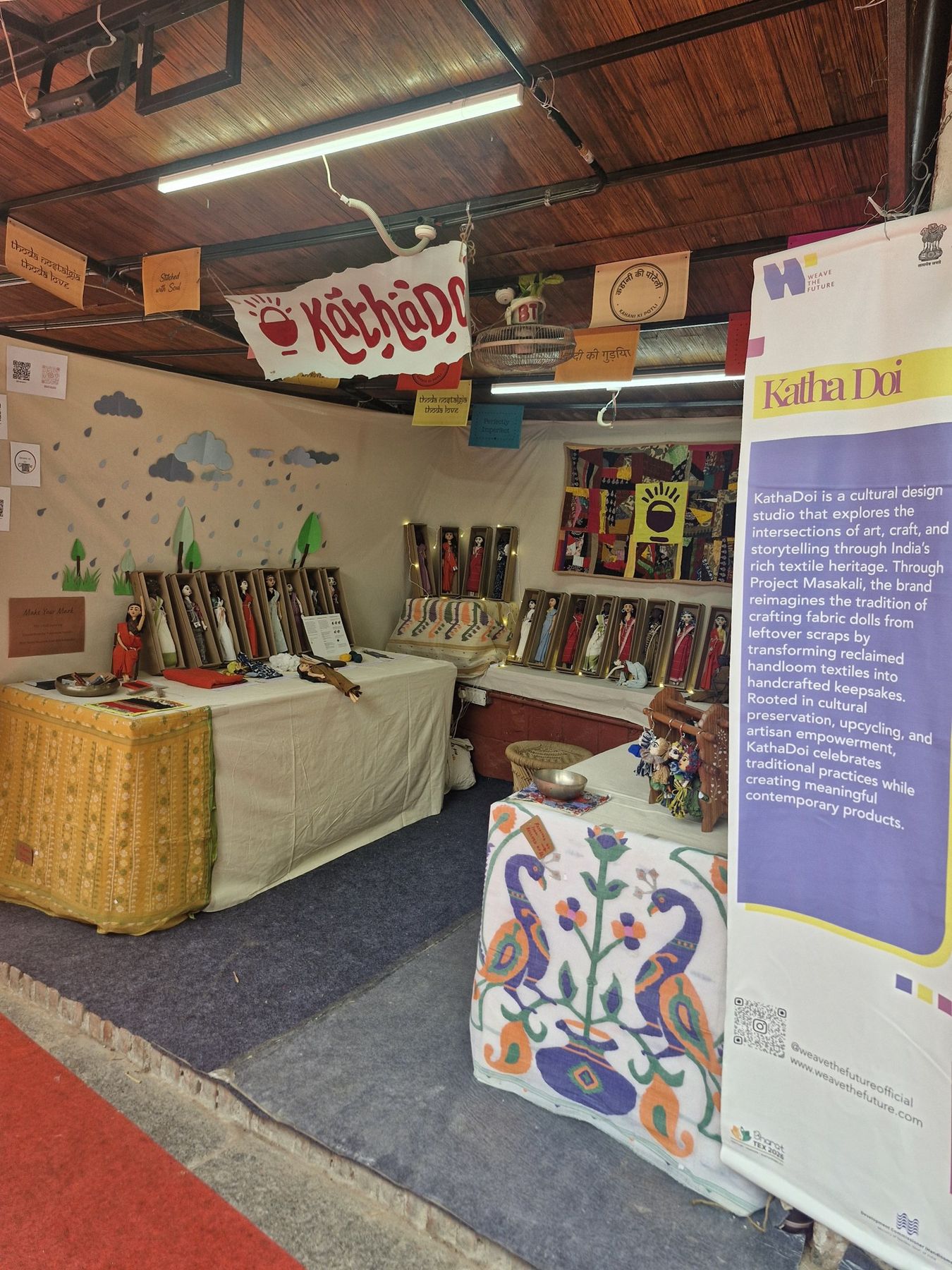
We exhibit regularly, most recently at Weave The Future 4.0, Dilli Haat. We bring our own display. Invite us, or host a KathaDoi corner inside your space.
Workshops and craft sessions
We teach doll-making to students, community groups and teams. Sessions can be run at your venue or ours.
Collaborate on a collection
A doll dressed in your weave, your archive fabric or your brand’s cloth; a limited run for an anniversary, a museum exhibition or a launch.
Good to know.
The short answers on the dolls, delivery, returns and care. The full terms are on the policy pages linked below.
What is a Masakali doll?
A hand-stitched fabric doll, 15 inches (38 cm) tall and articulated, with a hand-embroidered face and yarn hair. Each one wears a miniature sari cut from reclaimed handloom, in one of two drapes, Nivi or Seedha Pallu.
Where does the cloth come from?
From three places: handloom saris that weavers could not sell because of a defect, off-cuts from tailors, and saris given by families who no longer wear them. The doll’s body is Latha cotton from Raipur’s textile market, filled with recycled fabric fibre.
Who makes the dolls?
Women trained in our Raipur workshop. Since August 2025 we have trained 18–20 women, and 10 now work with us regularly. Training is paid: the faces they embroider while learning become Shakl keyrings.
Are the dolls made to order?
No. The dolls on the website are finished and in stock, and orders are usually dispatched within 1 to 2 working days. Most dolls are one of a kind; selected designs are made in matched runs of five.
What does shipping cost, and how long does it take?
Shipping is free within India, and orders usually arrive 5 to 6 working days after dispatch. International shipping is charged by weight and destination and is shown at checkout. See the shipping policy.
What is your return policy?
We accept returns only if your doll arrives faulty or damaged, or if we sent the wrong item. Email care.kathadoi@gmail.com within 3 days of delivery with your order ID and photos, and we will arrange the return and cover the return shipping. Small differences in colour, texture and stitching come with handmade work and are not treated as faults. The full terms are on our Return & Refund page.
How do I care for my doll?
Spot clean gently with a damp cloth. Do not machine wash.
Can I buy your handloom saris online?
Not on this website. Saris are sold at the KathaDoi Handloom store in Raipur, at exhibitions, and over WhatsApp and Instagram.
Workshop in Raipur, Chhattisgarh · Registered office in Bengaluru